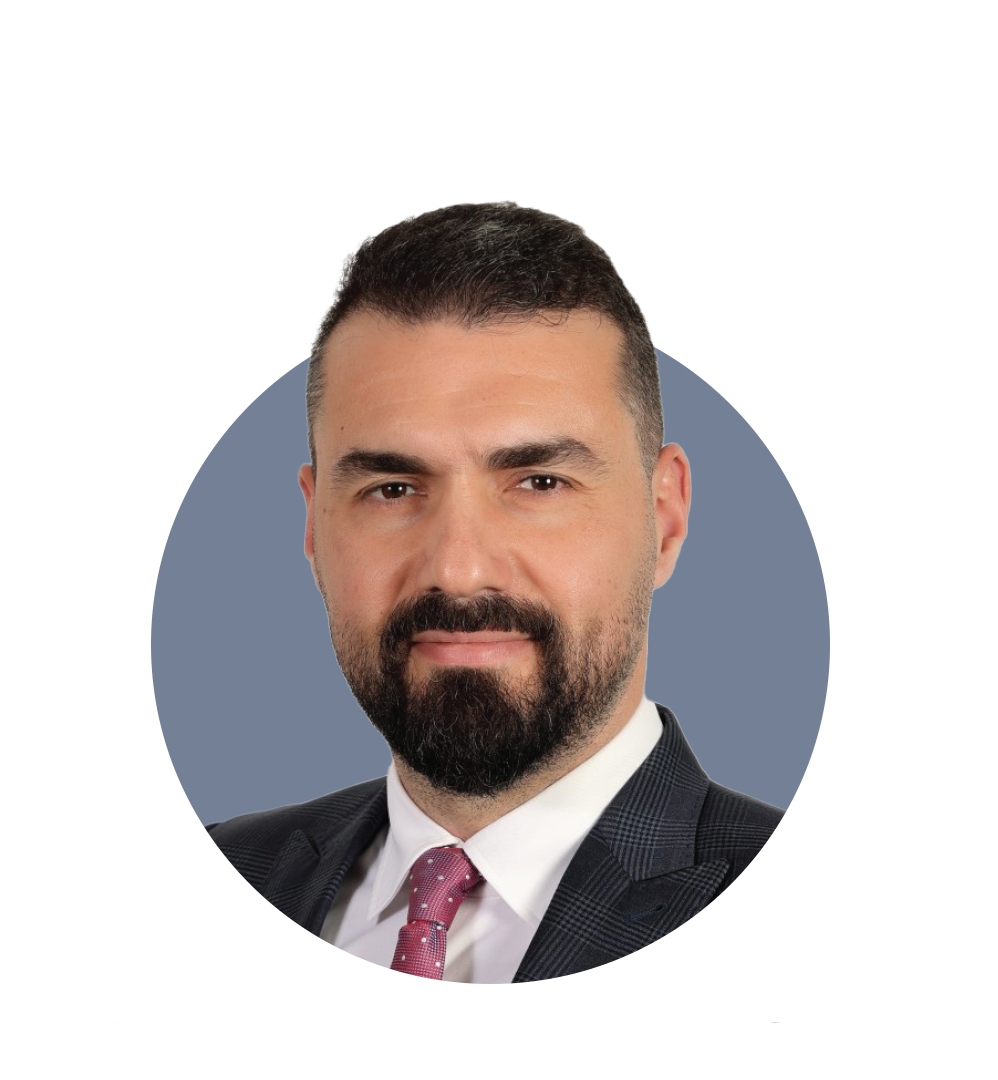
Syria in Figures interviewed Omar Barahmji on legislative reform, market recovery, supervisory responsibilities, and the Exchange’s strategic outlook.
Legislative Framework of the Market
Is there work underway to amend the market’s legislative framework, particularly Law 55 of 2006?
The legislative framework is the bedrock upon which investor confidence and market efficiency are built. While Law 55 of 2006 provided a vital foundation for the Exchange’s launch, the economic and financial developments of recent years, coupled with international shifts, necessitate periodic review. No market can operate with a static legislative mindset in a changing environment.
In coordination with the Syrian Commission on Financial Markets and Securities (SCFMS) and relevant authorities, we are evaluating specific legislative and regulatory aspects to ensure alignment with international best practices, particularly the principles issued by the International Organization of Securities Commissions. This is intended to enhance transparency, protect investors, and strengthen market efficiency. We are reviewing the relevant laws and regulations, and proposals will be submitted to the supervisory authorities in due course. As you know, this process is contingent upon the completion of the legislative authority represented by the People’s Assembly.
Does the representation of listed companies and brokerage firms on the Board conflict with transparency rules?
Stakeholder representation on the Board is intended to ensure a deeper understanding of market dynamics, but it does not imply a breach of governance or integrity. Clear protocols are in place to manage conflicts of interest, including prior disclosure and abstention from voting where a direct interest exists, supported by specialized committees that strengthen the governance framework.
The objective is to balance professional representation with effective oversight. This approach is common in many financial markets. Furthermore, the Board’s composition—consisting of nine members—is carefully structured: three are independent experts, one represents the SCFMS, and one represents the Central Bank. Of the remaining four, two represent listed companies and two represent brokerage firms. The representation is therefore balanced and well-regulated.
Recovery and Market Development
After 14 years of crisis, what are the prospects for market development?
The upcoming phase represents an opportunity for repositioning, particularly given the growing need to diversify financing sources and gradually transition from exclusive reliance on bank financing to market-based instruments. We see significant opportunities in expanding the base of listed companies, developing new financial instruments, and fostering institutional investment.
Is there cooperation with government entities and the private sector to revitalize the market?
Yes, coordination has begun with relevant government bodies, alongside meetings with private sector representatives. These discussions make it clear that listing and incentivizing new companies requires an integrated environment encompassing legislation, taxation, and investment incentives—all of which we are addressing within a holistic framework.
Are there any listing applications currently under review?
There is ongoing communication with several local companies. Regarding Arab or foreign firms, interest exists, but the decision is tied to factors beyond the market itself, including the broader economic environment, the investment and legislative framework, tax laws, and the development of the banking system to ensure secure channels for the transfer of investor funds.
Why are there no active investment funds yet?
Activating investment funds requires a sufficient institutional demand base to ensure success and sustainability. The regulatory structure is in place; however, the optimal timing is being evaluated in coordination with the Commission. The launch must be based on a functional study of supply and demand dynamics, rather than a purely formal step.
How prepared is the market for the trading of Islamic Sukuk?
Technically, the market is capable of absorbing new financial instruments, including Islamic Sukuk. Work is underway to prepare the regulatory frameworks in coordination with specialized authorities to ensure compliance with Sharia and regulatory standards—particularly in light of Resolution 205, which allows Islamic banks to issue Sukuk but requires executive instructions to enable their trading on the exchange. Introducing such instruments will help diversify the investor base and deepen the market.
Is there interest from Arab and foreign investors?
Interest is present. The scale of participation, however, is linked to broader economic and geopolitical factors. We are working to enhance transparency, simplify procedures, and secure banking channels to facilitate investor entry, while maintaining compliance and supervisory requirements.
Does the market face difficulties regarding its technological infrastructure?
Yes. The challenges include the need to upgrade aging technical infrastructure amid a contraction in revenue channels that cover development costs. We are seeking to modernize systems and enhance the efficiency of electronic platforms to meet contemporary trading requirements and improve access to information. We have begun assessing the current situation to estimate the gap and work toward closing it within an acceptable timeframe, subject to available resources.
The Supervisory Role of the Exchange
Is there a regulatory overlap between the Exchange and the Commission (SCFMS)?
The relationship is complementary rather than overlapping. The Exchange manages the trading platform and oversees technical and operational compliance, while the SCFMS exercises the higher regulatory and supervisory role. Ongoing coordination helps avoid any duplication of requirements.
What measures are taken against companies that fail to comply with disclosure requirements?
Commitment to disclosure is a fundamental pillar of investor trust. In cases of non-compliance, measures are taken in accordance with applicable regulations and may include warnings, fines, or the suspension of trading. These measures are published to uphold transparency.
What is the Exchange’s role in combating money laundering?
This is a priority for the Exchange in the coming phase. Without it, we will be unable to integrate with other markets or attract new investors.
Who holds the authority to freeze securities?
The authority to freeze securities is governed by applicable laws and is exercised pursuant to judicial rulings or requests from legally authorized entities. We also screen names against approved lists, with brokerage firms and the Exchange implementing these actions through clear and defined mechanisms.
Strategic Vision
Is there a strategic plan to attract capital?
We are working to enhance the market’s role as a financing tool for the national economy by developing financial instruments, expanding the listing base, and strengthening the confidence of both local and foreign investors. Our strategy focuses on building a deeper and more sustainable market rather than pursuing temporary or superficial growth.
Is there a move toward regional and international integration?
Communication and the exchange of expertise have begun, albeit cautiously, with one market. We aim to gradually integrate into the regional system when appropriate conditions are met, in a manner that serves the national economy and maintains financial stability.
What are your expectations for the next three years?
We anticipate gradual growth in the number of listed companies and in trading volumes as the business environment improves. Our focus will remain on stability, sustainability, and deepening the market rather than pursuing short-term spikes.