

By: Hadeel Al-Shaarani
A Syrian worker does not experience inflation as a figure in economic bulletins, but as a burden that directly affects their family’s living conditions. The key question is: how many days must they work to afford a month’s food for their family?
Between January and April 2026, annual inflation nearly doubled from 13.7% to 27.5%. Yet inflation alone cannot show whether workers can more easily afford basic needs; income changes relative to living costs also matter.
Food affordability can be measured by the number of workdays needed to cover a month’s food costs, excluding other expenses. World Food Programme (WFP) data show that in January, an unskilled daily worker needed 24.9 days’ wages to cover food for a five-person household. The figure reached 27.5 days in March, then fell to 17.4 days in June.
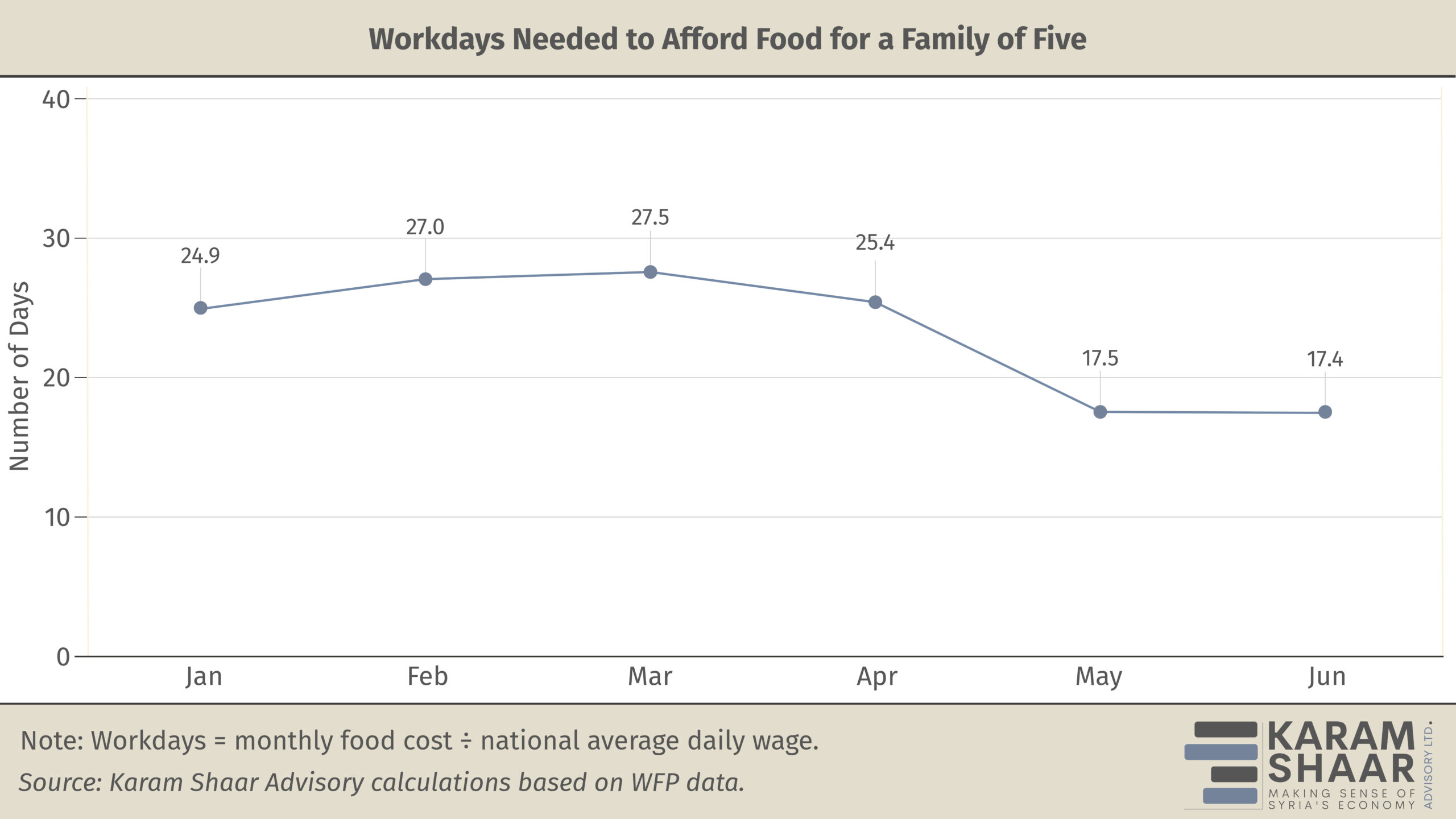
What drove the improvement: food prices or wages?
As shown in the chart below, food costs in June were 7.9% higher than in January, while daily wages rose by 54.1%, indicating that the decline in the number of workdays needed to cover food costs was driven primarily by higher wages. The largest shift occurred in May, when the average daily wage rose 43% from the previous month.
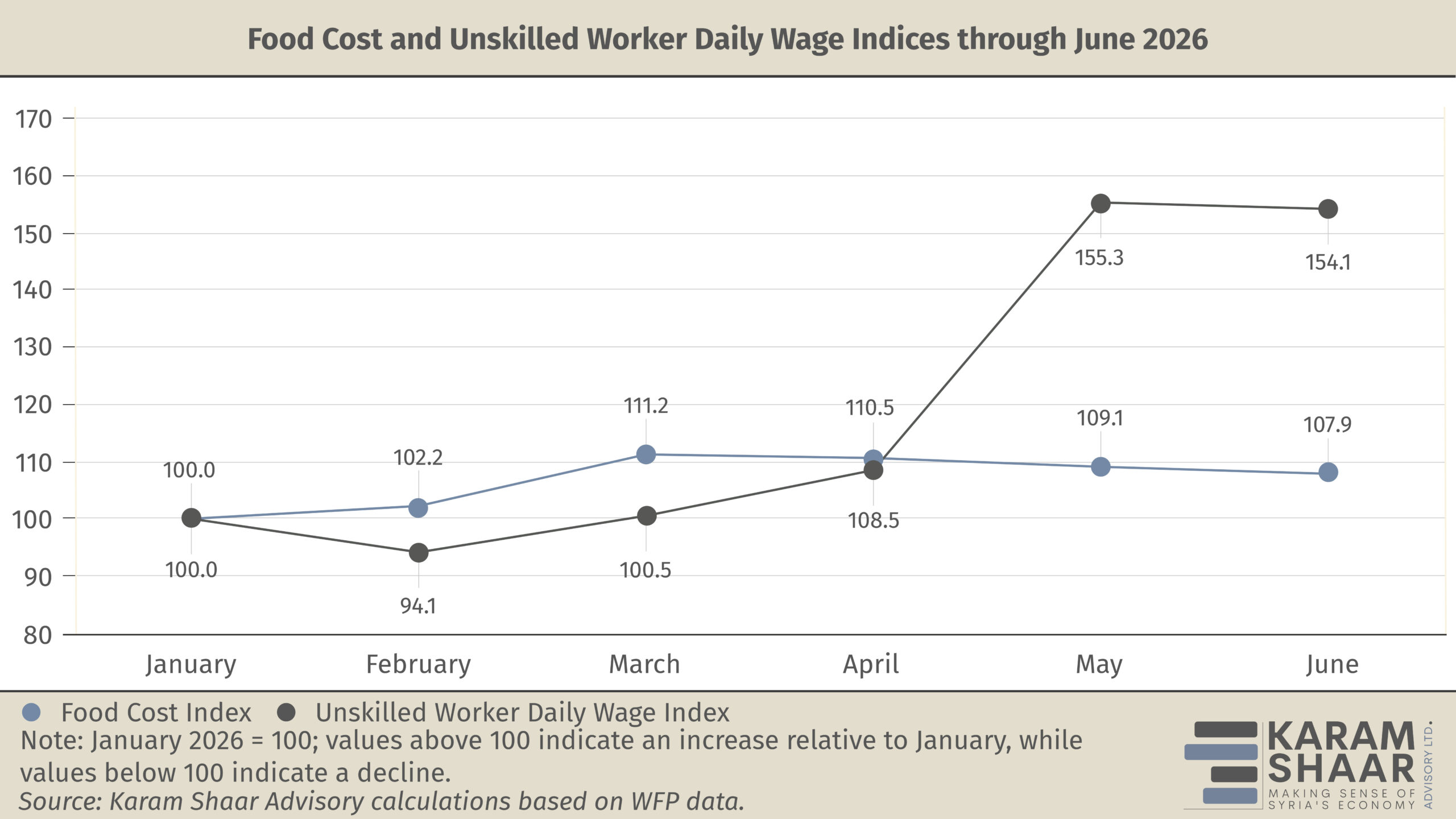
However, the WFP June report notes that part of the recorded wage increase may reflect improved data collection, meaning that the observed rise may not entirely represent actual changes in market wages. The overall expenditure basket, including food and other basic needs, cost 26,551 new Syrian pounds (NSYP), equivalent to 27.5 workdays in June.
Food has become more affordable relative to reported wages, but whether this improvement will last remains uncertain.