

By: Hadeel Al-Shaarani
Markets in As-Suwayda were fragile before violence erupted in July 2025. In May 2025, the World Food Programme’s (WFP) Market Functionality Index, which measures market efficiency and the safe and regular access to essential goods at stable prices, scored the governorate 3.9 out of 10. This was the lowest in Syria, and well below a national average of 5.5.
Escalated violence and consequent insecurity and displacement compounded this fragility. Local markets were closed for 15 days, and supply routes were disrupted, constraining access to food supplies. This quickly translated into a sharp increase in the cost of living. The Consumer Price Index, which measures changes in the prices of goods and services purchased by households, surged from 773 points in June to 1,839 in July, recording a staggering monthly inflation rate of 138%. That month, nationwide inflation reached 10.4%, but fell to just 1.6% when As-Suwayda was excluded from the calculation. The national price shock was heavily concentrated in the governorate.
While the price shock gradually eased, prices had not returned to their pre-violence levels. By April 2026, the index had declined to 1,021 points, 44.5% below its July 2025 peak, but remained around 32% above its June level.
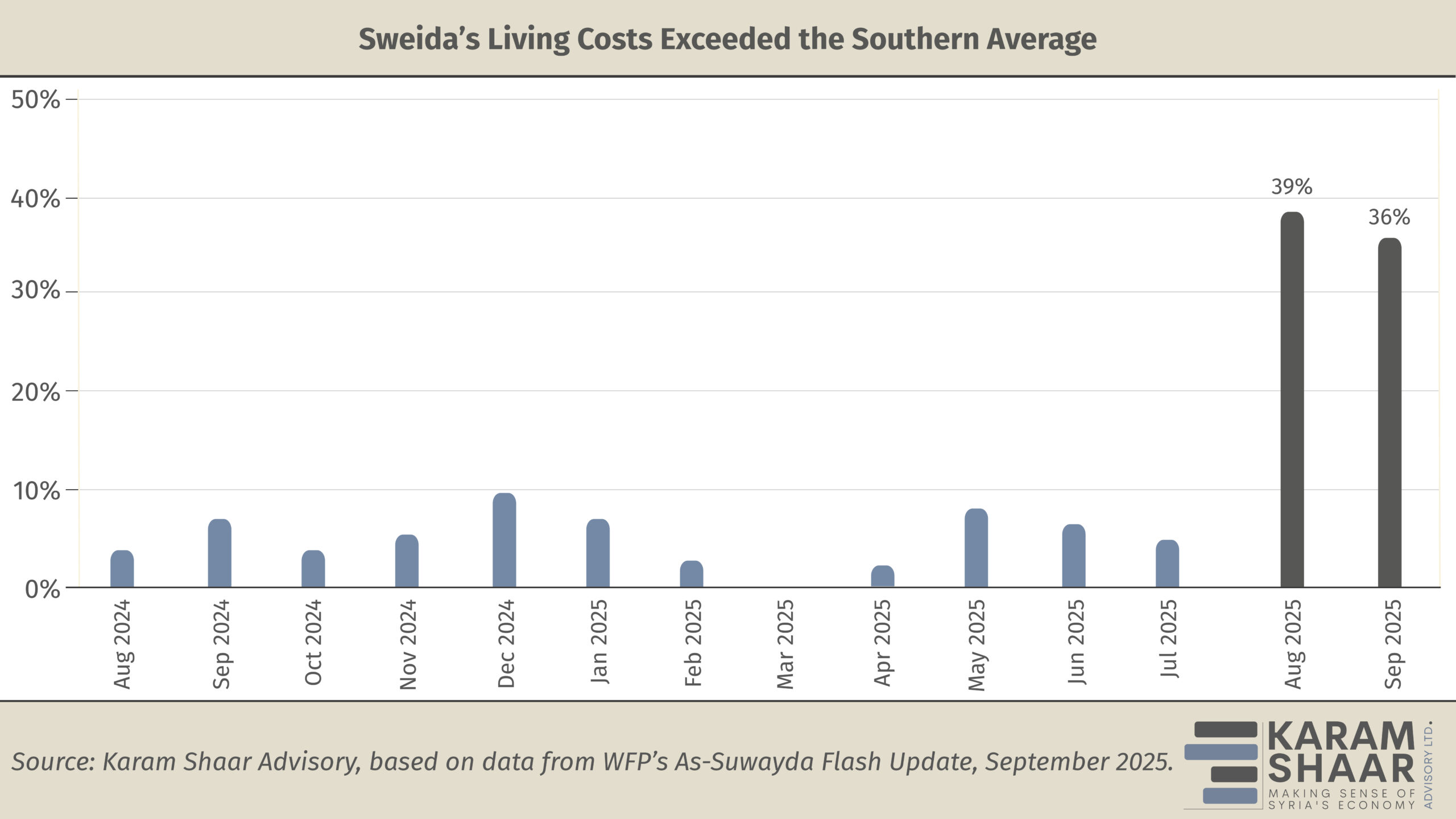
WFP’s September 2025 Flash Update on As-Suwayda illustrated the impact of the price shock on living costs and food security. The cost of the Minimum Expenditure Basket, an estimate of the monthly cost of a household’s basic needs, had reached SYP 3.04 million. As shown in the figure, the basket cost was 36% above the average in the south. The share of households with poor food consumption increased from 9% in June to 36% in July, before easing to 16% in September as aid and some supply flows resumed.
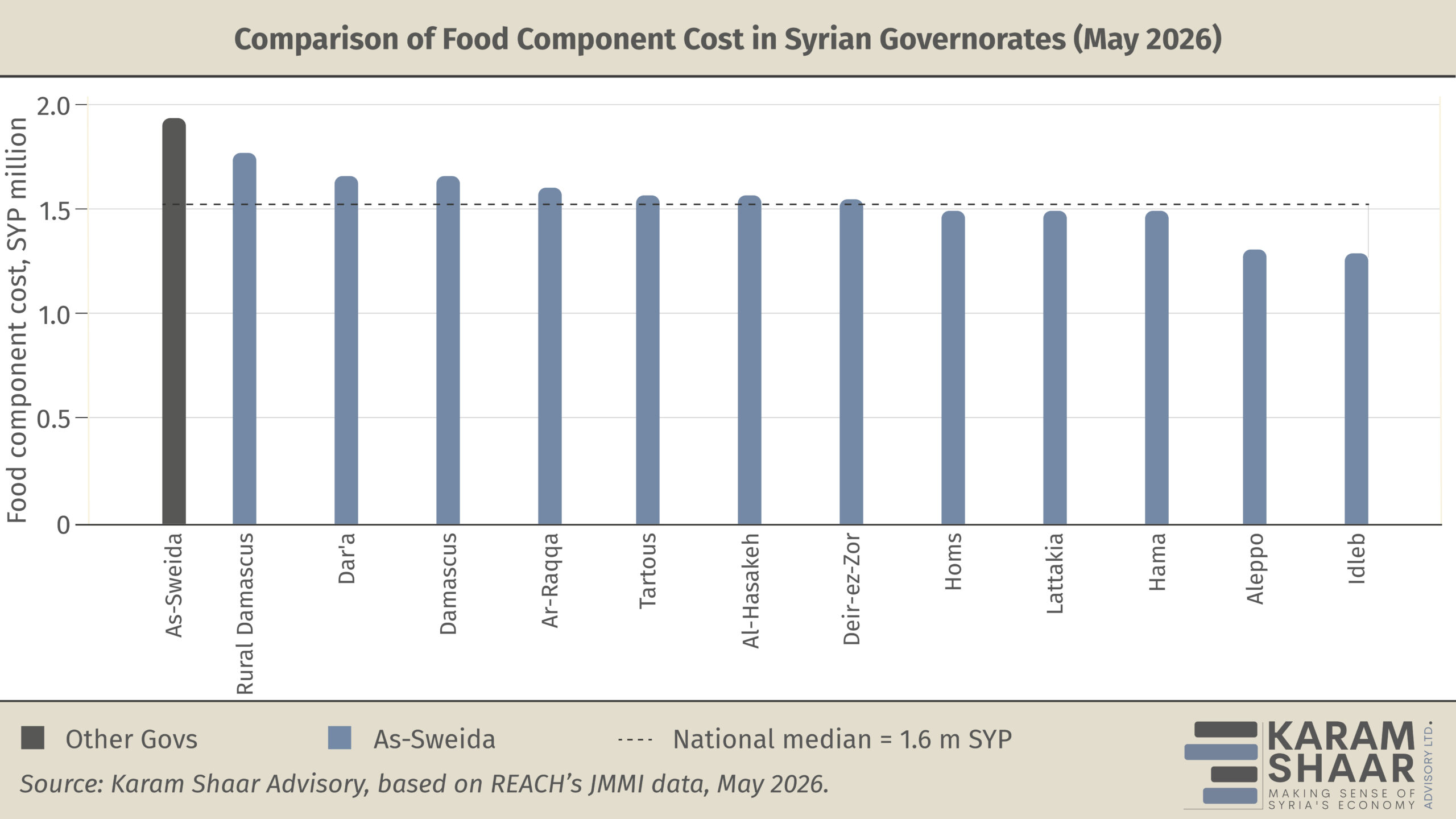
REACH’s Joint Market Monitoring Initiative (JMMI) shows that price pressures persisted in As-Suwayda as of May 2026. The cost of the food component of the Minimum Expenditure Basket for Survival is especially indicative. Costs for a six-member household reached roughly SYP 1.9 million, the highest nationwide, exceeding the national median by 24% and the second-highest cost in Rural Damascus by 9%.
JMMI data further reflect ongoing supply constraints: 89% of traders in As-Suwayda reported operational obstacles, compared with 57% nationally, indicating that supply disruptions continue to limit market recovery.
Far from a fleeting price surge, the July 2025 crisis was a stress test that exposed deeper vulnerabilities in As-Suwayda’s local market capacity. Despite price indices falling from their peak, food costs remain elevated relative to other regions amid continued supply and operational constraints.