
By: Roaa Obeid
Since the fall of the Assad regime in December 2024, Syria’s transitional government has dismantled major captagon production sites and warehouses. Yet the trade persists, driven by weak institutional control in southern and northeastern Syria, resilient transnational networks, and profitability. Continued illicit drug activity highlights challenges facing Syria’s anti-narcotics apparatus and the need for regional drug enforcement coordination.
Syria’s Anti-Narcotics Administration faces the persistent captagon smuggling challenge amid a genuine capacity gap and fragmented territorial control. This has prompted the transitional government to restructure the apparatus by expanding recruitment and training and by deepening coordination with Iraq, Jordan, Saudi Arabia, and Lebanon.
Domestically, genuine efforts to clear the Assad-era stockpile are evident. New Lines Institute data show a jump in 2025 seizure volumes in Syria and Lebanon. Yet captagon smuggling from Syria persists, and efforts by the transitional government have not yet succeeded in curbing the illicit trade.
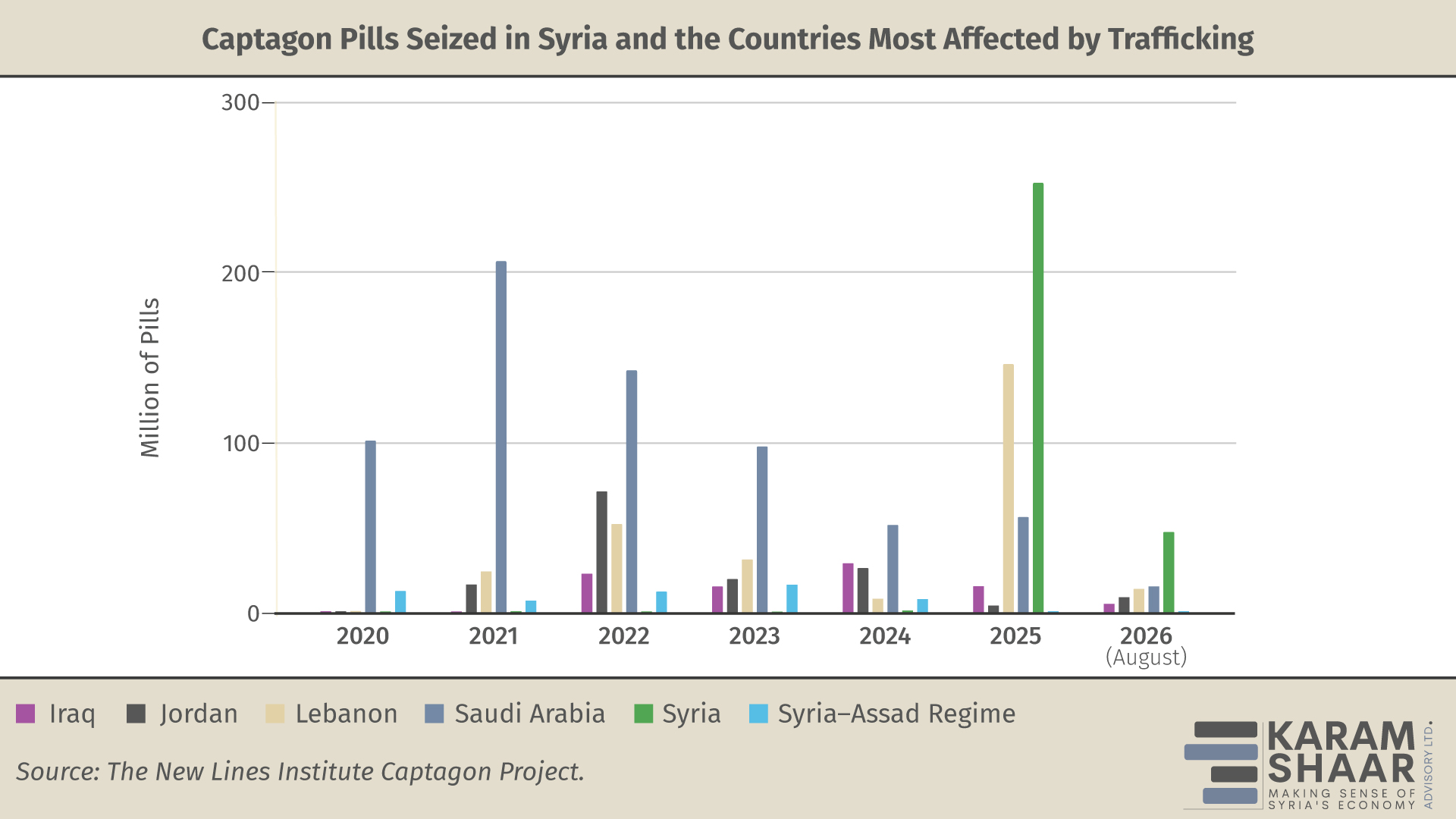
To compensate for fragmented control, Damascus deepened intelligence-sharing with neighboring countries. This regional coordination enabled targeted interdictions both at transit borders and within participating countries’ territories.
Border enforcement also became stricter. Iraq is fortifying its borders. Syria is carrying out a campaign to seal tunnels along the Lebanese border linked to Hezbollah. Coordination between Damascus and Amman to oversee the southern border persists, even as Syria’s military access in the south remains constrained.
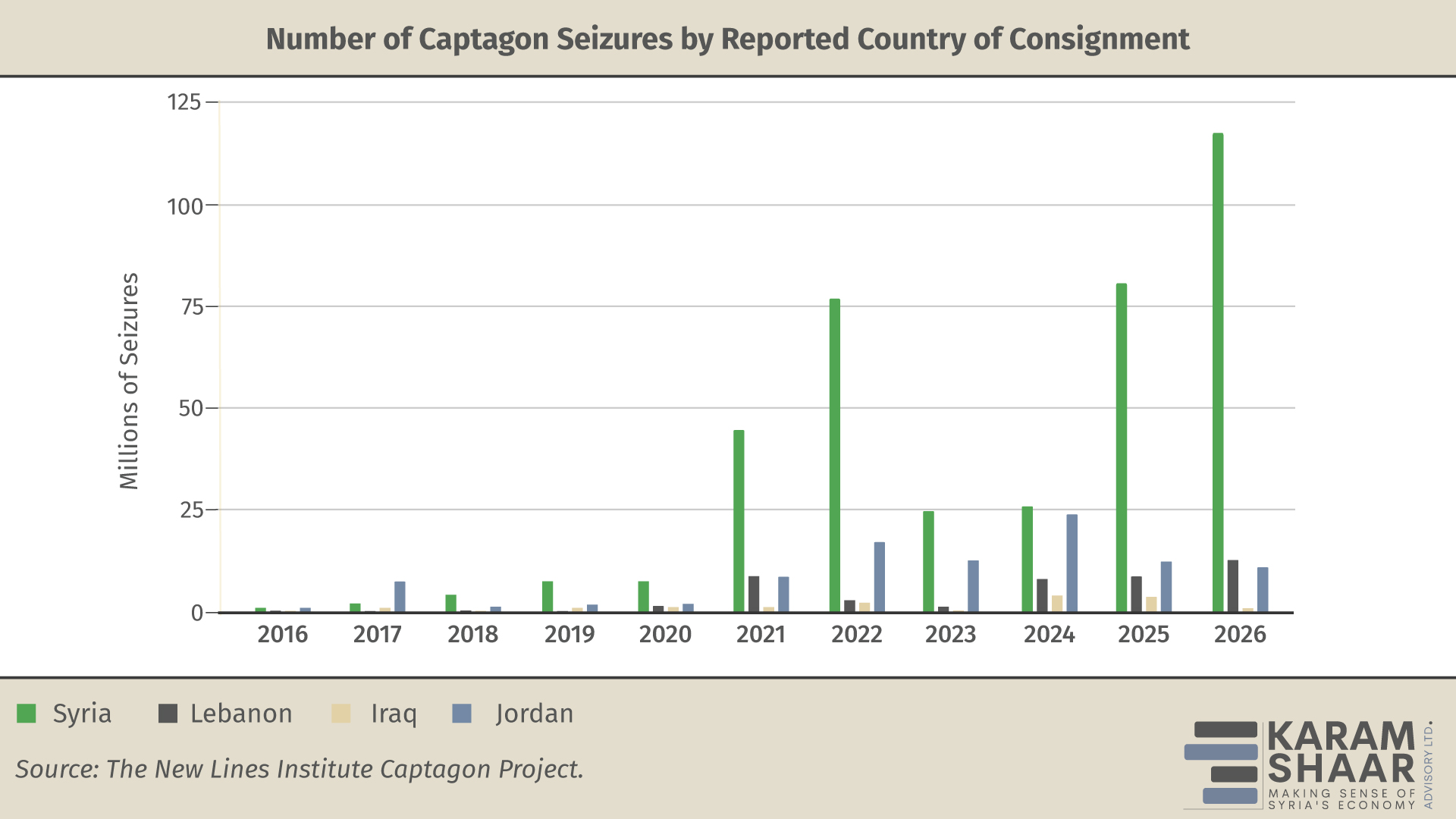
The surge in intercepted consignments originating from Syria indicates that trafficking networks persist, now operating through decentralized, higher-frequency smuggling operations. While domestic security raids in southern Syria remain limited, seizures at the Jordanian border remain at peak levels. Enforcement in northeastern Syria has improved but remains incomplete.
To consolidate gains, regional and international actors must prioritize professionalizing Syria’s anti-narcotics bodies. In areas beyond Damascus’s reach, this requires deploying alternative oversight, such as internationally backed community monitoring, integrating neutral factions into formal border security, and providing alternative livelihood programs to eliminate the financial incentives driving the illicit trade.