
By: Hadeel Al-Shaarani
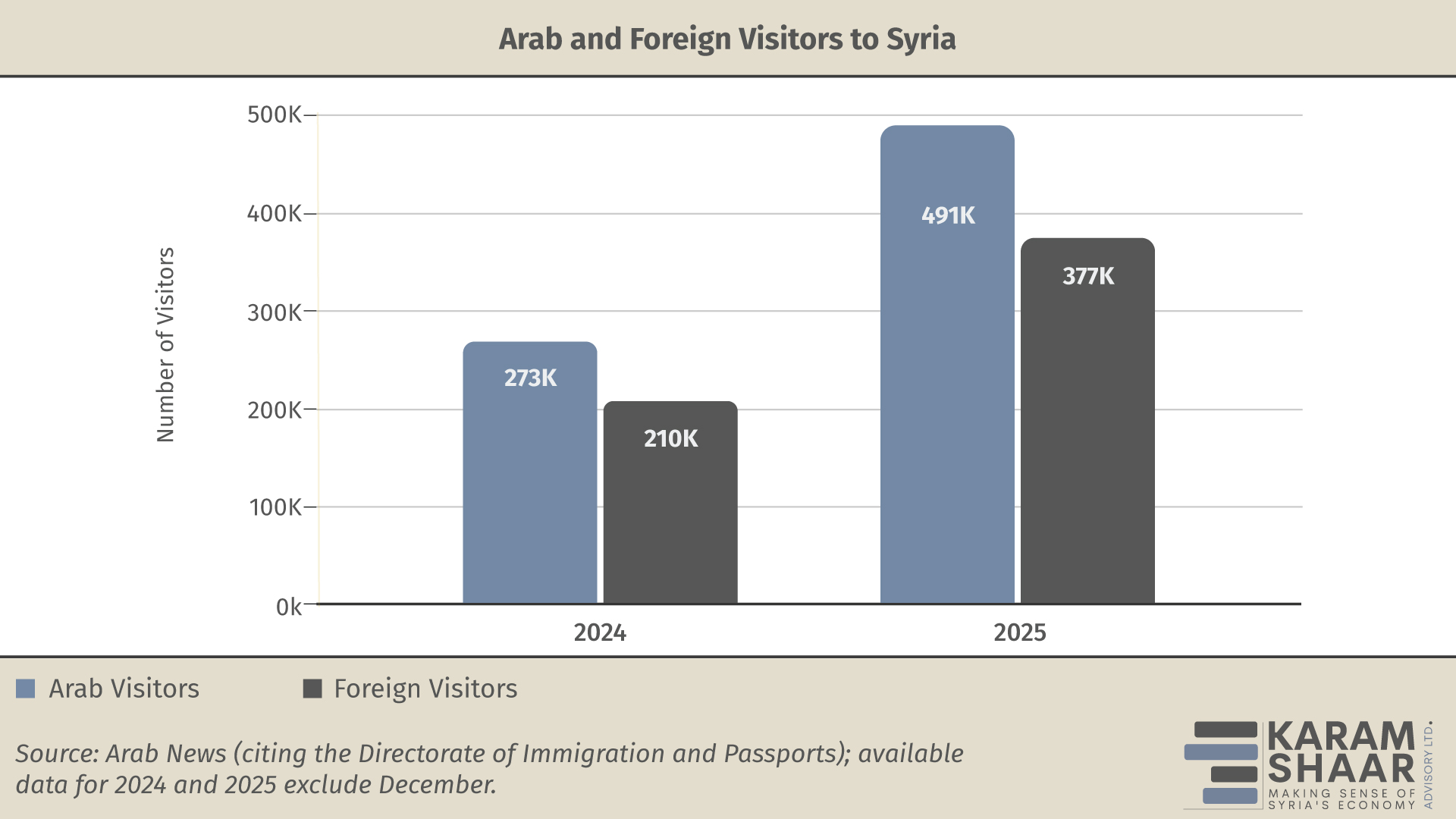
Visitor flows to Syria began to improve in 2025, as the number of Arab and foreign visitors rose to around 868,000 during the first 11 months of the year, compared with about 483,000 during the same period in 2024. This improvement preceded the larger increase recorded in the first half of 2026, but higher arrival numbers remain only a preliminary indicator and are not sufficient on their own to assess the recovery of the tourism sector.
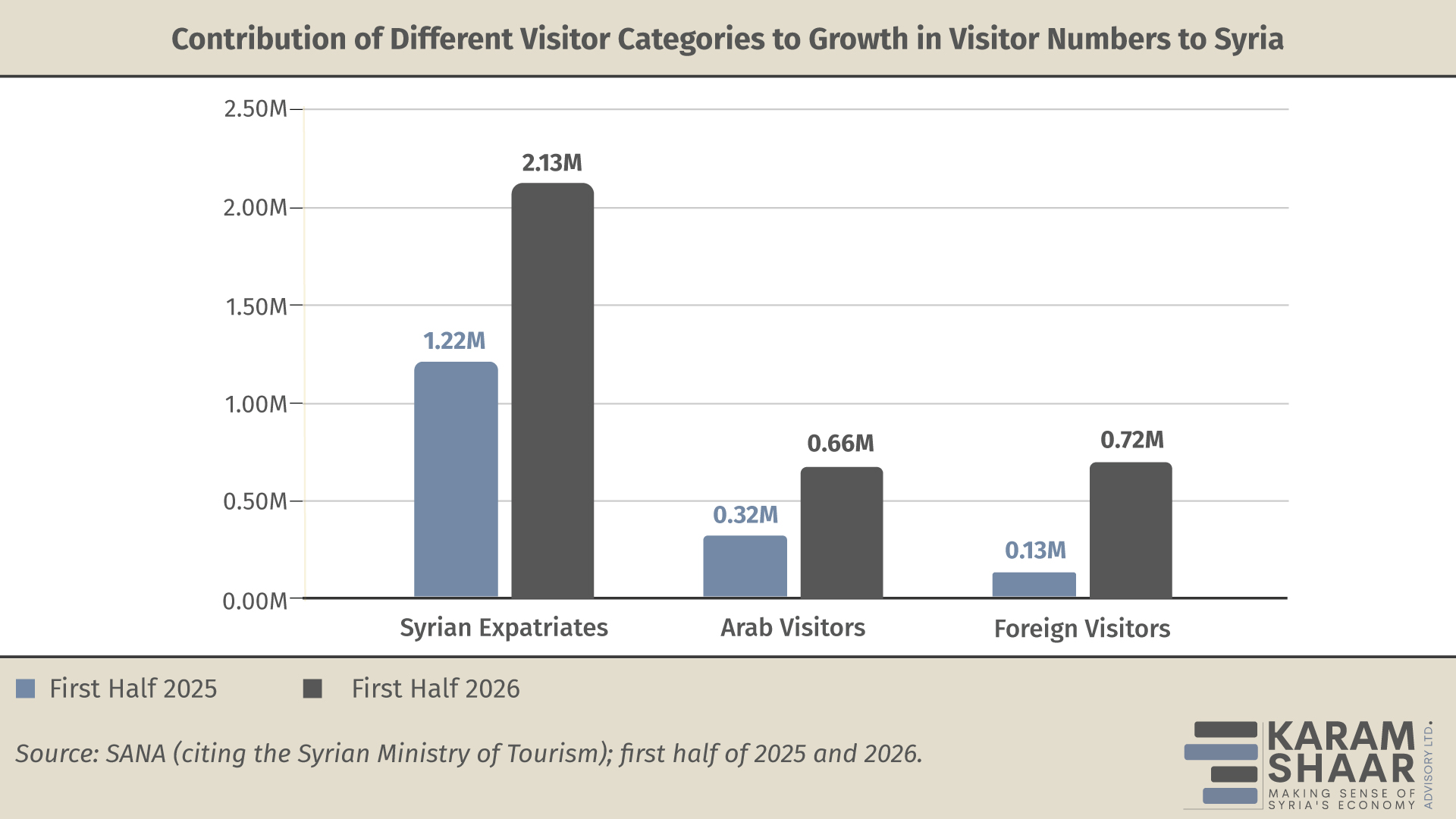
The scale of this increase is clearer in data for the first half of 2026, when Syria recorded 3.52 million visitors, compared with 1.67 million in the same period of 2025, an increase of 111%.
The contribution of different visitor groups to this growth, however, varied. Despite faster growth among Arab and foreign visitors, expatriate Syrians accounted for the largest numerical increase, while foreign visitors recorded the highest relative growth rate of the three groups. This points to a gradual expansion in external demand for travel to Syria.
To interpret this increase, it is important to distinguish between a “visitor” and a “tourist.” Visitor arrivals may include family, business, religious, and leisure trips, so they do not necessarily reflect tourism activity alone. For this reason, UN Tourism methodology distinguishes visitor arrivals from indicators such as length of stay, hotel nights, and visitor spending. This distinction is also evident in Syria: in 2024, Arab and foreign arrivals reached about one million by early July, while Arab and foreign hotel guests numbered only about 129,000 by the end of June. Although the figures cover slightly different periods and use different definitions, the substantial gap illustrates why visitor arrivals alone cannot reliably measure activity in tourism establishments.
Beyond demand, tourism recovery also depends on the sector’s capacity to absorb increased activity. Hotel capacity remains limited: according to statements from the Ministry of Tourism, Syria has fewer than 20,000 hotel rooms, around 60% of them in one- and two-star properties. Ministry data also indicate that 1,468 tourism establishments, including 365 hotels and 1,103 restaurants, need rehabilitation or reactivation, underscoring current operational constraints. At the same time, tourism contracts and MoUs worth about USD 1.5 billion have been announced for hotels, resorts, leisure projects, and historic areas. Their impact, however, will depend on whether these projects are implemented, while some, including Rotana’s proposed return to Syria, remain under negotiation.
The economic dimension of the recovery also requires more detailed data on tourism revenues, as the value generated by increased visitor flows remains unclear. Tracking revenue trends alongside accommodation and investment indicators will be essential to assessing the recovery trajectory ahead.