By: Abeer Asaad
Liquidity is one of the five core sets of Financial Soundness Indicators (FSIs) issued by the International Monetary Fund. It is one of the six components of the CAMELS supervisory rating framework for banks. A decline in liquidity may indicate an inability to meet obligations to third parties. But excessively high liquidity is not necessarily a positive indicator, as it may undermine the effectiveness of monetary policy and constrain the volume of credit available to the economy.
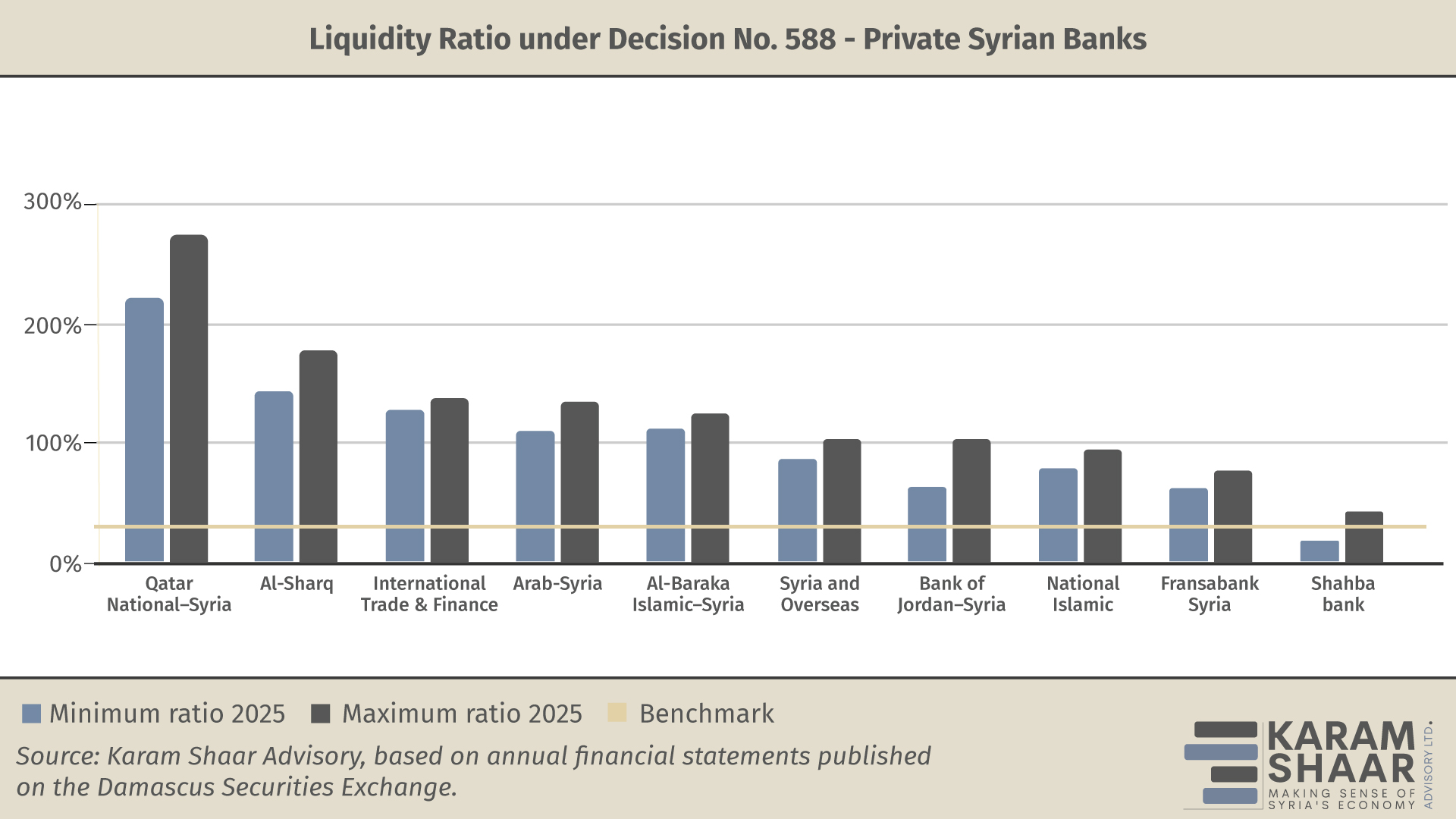
Published data from Syrian banks listed on the Damascus Securities Exchange show very high liquidity ratios in 2025, well above the legal minimum of 30% across all currencies (except for Shahba Bank). The figures vary widely among banks, as the chart below shows. These ratios measure net liquid assets divided by total deposits and other liabilities, including off-balance-sheet commitments. Banks publish the minimum and maximum of this ratio each year, with values ranging from a low of 16% at Shahba Bank, below the prudential minimum, to a high of 274% at Qatar National Bank–Syria. 7
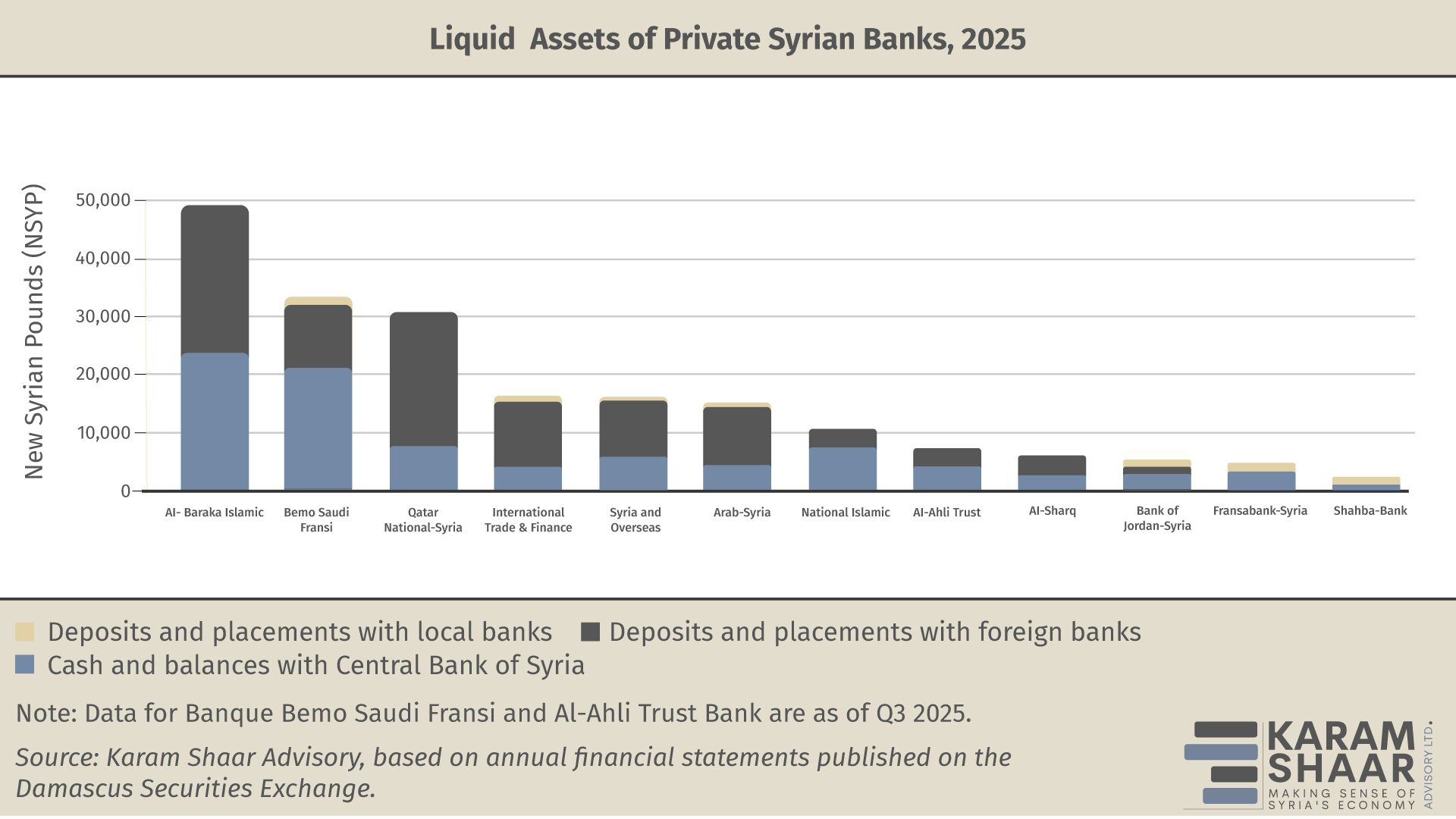
The variation among these ratios conceals differences in the size of the balances that make up each bank’s liquidity. The distribution of liquid assets (cash and balances with the central bank, and balances and deposits with both domestic and foreign banks) varies across banks. Foreign assets were concentrated in a few foreign banks, mainly the parent institutions of Syrian banks, due to sanctions, transfer restrictions, and correspondent banks’ de-risking. Total foreign assets accounted for 38% of aggregate banking assets in 2025, up from 36% in 2024. As the chart below shows, Al Baraka Islamic–Syria and Qatar National–Syria had the highest foreign-balance shares of liquid assets.
By contrast, the lower share of foreign balances at Al-Shahba and Fransabank Syria reflects the recognition of expected credit loss allowances on their exposures to Lebanese banks, with these assets reported net of the allowances. This exposure illustrates the high concentration risk of holding reserves abroad, particularly after the Central Bank mandated that Syrian banks make provisions covering 100% of losses on their exposures in Lebanon.
Repatriating foreign balances would ease this concentration outside the domestic banking system. Lifting SWIFT restrictions on Syria’s central bank and repealing the Caesar Act have enabled progress: connectivity already existed, but sanctions blocked commercial transfers. Repatriation still requires restored correspondent relationships and compliance with anti-money laundering and counter-terrorism financing requirements. Launching the officially announced interbank liquidity market would channel surpluses to banks in need of funds, thereby supporting lending and productive activity.