Achieving Social Equity through Direct Taxation
In the previous issue of Syria in Figures, we introduced the Syrian Interim Government’s ongoing efforts to reform the national tax system, highlighting changes it has undergone since the start of the conflict in 2011. This article turns to direct taxation. Direct taxes—such as income, corporate, and property taxes—are paid directly to the government by individuals or businesses. Unlike indirect taxes, which are embedded in the prices of goods and services and passed on to consumers, direct taxes are borne by the taxpayer.
Direct Taxes in Decline
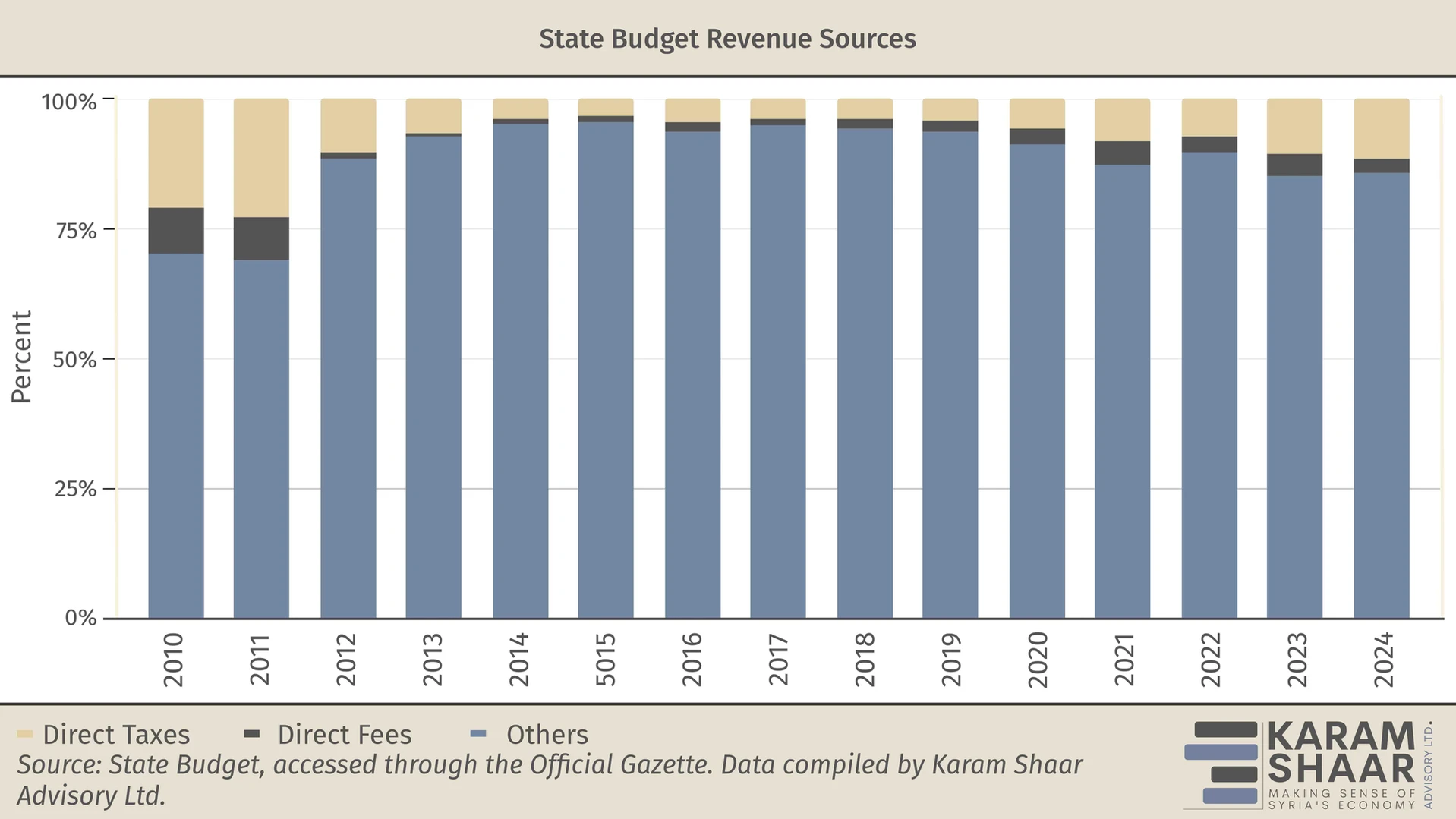
The share of direct taxes in total government revenue dropped sharply during the conflict, falling from 21% in 2010 to just 11% by 2024, according to state budget figures (see chart above). This decline reflects a broader erosion of tax and fee revenues, driven by the expansion of the informal economy and widespread tax evasion. Although the nominal value of direct tax revenues has increased—from SYP 157.3 billion to SYP 4.0 trillion—this is largely the result of inflation and currency depreciation, not a sign of economic recovery or more effective tax collection. In US dollar terms, expected revenue from direct taxes fell from USD 4.8 billion in 2010 to just USD 400 million in 2024.
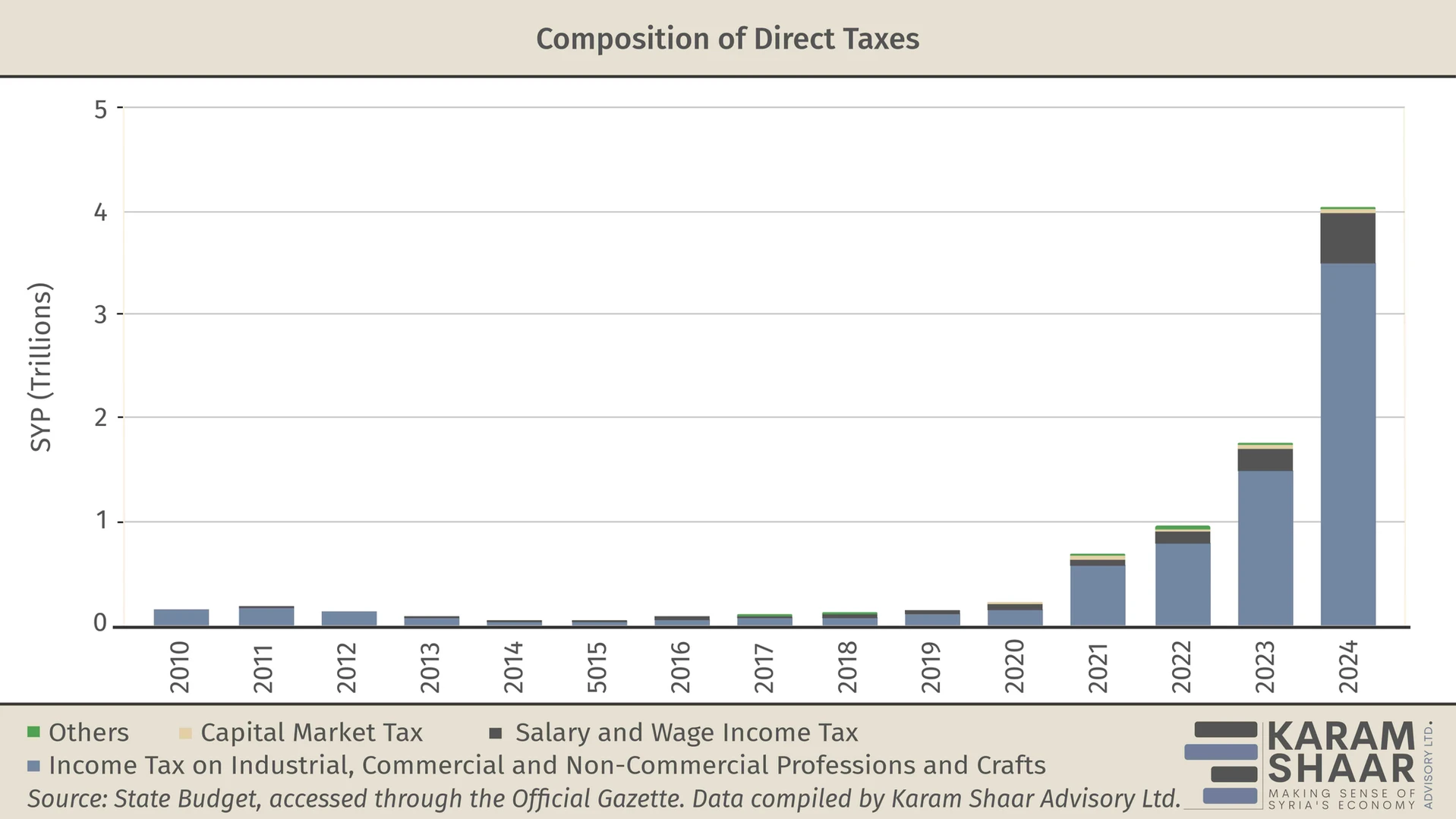
Since 2010, the largest share of direct tax revenue in Syria has come from income taxes on industrial, commercial, and non-commercial professions and crafts. These are followed by salary and wage taxes, which contributed 12.2% in 2024 (see chart above). Both categories fall under Income Tax Law 24 of 2003, which underwent extensive revisions in its early years to improve fairness and transparency. For employees, taxes are withheld at the source by employers; for business owners and self-employed workers, income must be self-declared. Syria applies a progressive income tax system; since 2011, various amendments have adjusted tax brackets to reflect inflation and rising nominal wages, with the latest taking effect at the beginning of 2024. A progressive structure ensures higher earners contribute more, while lower-income individuals benefit from reduced rates. Small pensions are exempt, and taxpayers have the right to appeal assessments. Penalties for noncompliance range from 10% to 120% of the tax due, depending on the severity of the violation. The Income Law also governs taxation on income from industrial, commercial, and non-commercial activities, including business profits, trades, and professional services. Taxable income is assessed based on net profits and subject to progressive rates. Certain sectors—such as agriculture and cooperatives—are exempt. In total, income and salary taxes accounted for 99% of direct tax revenue in 2024. The remaining 1% came from four minor taxes: the capital market tax, real estate income tax, land value tax, and livestock tax. While no revenue has been projected from the livestock tax since 2020, the 2023 end-of-year audit shows that 3 million SYP (about USD 260) was still collected—indicating it has not been formally abolished.
Direct Fees Holding Better
Unlike taxes, fees have remained a more stable revenue source for the government, with relatively low evasion risk. However, they place a significant burden on residents. For example, cars were historically subject to more than ten direct and indirect fees applied under various labels, making ownership prohibitively expensive in regime-held areas before Assad’s downfall.
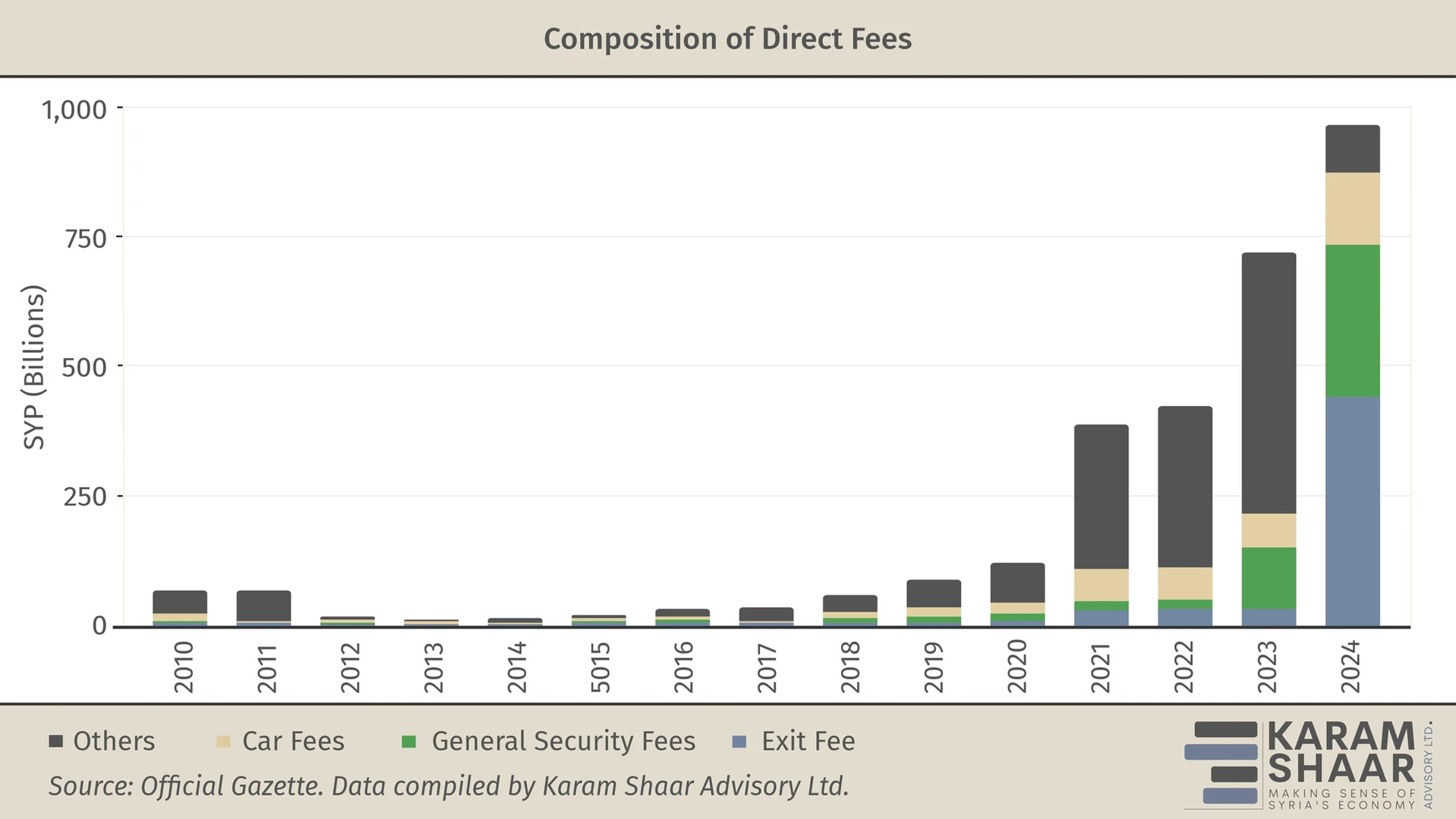
Based on 2024 projections, the largest share of direct fee revenue came from the exit fee, which was expected to generate 84% of the total (see chart above). Originally regulated under Legislative Decree 31 of 2008 and last adjusted in 2022, this fee is imposed on individuals and vehicles departing the country by air, land, or sea. Exemptions apply to diplomats, official delegations, and others, in line with reciprocity and operational needs. The second-largest source of direct fee revenue in 2024 was the so-called “general security fee,” primarily linked to passports, residence permits, and fines for overstaying visas or permits. These fees have risen steadily since 2011, with the most recent hike in early 2024 increasing costs more than fourfold. This category moved from sixth place in 2010 to second by 2024, capitalizing on the regime’s monopoly over official documentation. Direct fees tied to car purchases ranked third, reflecting the regime’s reliance on vehicle-related revenues. Other direct fees in 2024 included charges for property transfers and real estate registration, exit permits, weapon licenses, investment transfers, irrigation, environmental protection, estate transfers, wills, and gifts.
Toward a Fairer Tax System
Syria’s direct tax system has become increasingly unbalanced. Income and salary taxes now account for nearly all direct tax revenue, while capital and wealth-based taxes—such as real estate income tax, land value tax, and capital market tax—have nearly disappeared. This shift reflects both a shrinking tax base and the state’s diminished ability to assess and collect taxes on assets and high-value property. Meanwhile, direct fees—especially those tied to passports, permits, and services—have surged. Though easier to enforce, these fees are regressive. These trends show a clear move toward a more regressive revenue model. While the system is formally designed to redistribute wealth through progressive rates and exemptions, this is not the reality. Beyond imbalances in direct tax and fee collection, several structural flaws currently limit the Interim Government’s ability to generate revenue effectively. Chief among these is the outdated approach of taxing each income source separately, which prevents authorities from assessing total income. Businesses also face significant distortions: large firms are taxed through lump-sum assessments similar to those applied to small vendors, resulting in unequal treatment. Widespread tax evasion further undermines the system—official data from 2022 estimates that SYP 2.2 trillion (around USD 100 million) in business turnover went undeclared. In the context of deepening inequality and poverty, reform is not optional—it is urgent. The interim authorities’ pledge to establish a transparent and inclusive tax system presents a rare opportunity to embed reforms that can restore state legitimacy and help prevent renewed conflict driven by deprivation. Priorities for reform should include introducing a unified, progressive income tax based on total earnings, replacing lump-sum business assessments with profit-based taxation, and reactivating dormant capital and property taxes, especially in urban areas where asset values remain high. These measures, combined with improved enforcement, targeted audits, and investment in tax administration, can help expand the revenue base in a fairer and more sustainable manner.