By: Roaa Obeid
Enforcement and political shifts disrupted large-scale captagon production in Syria and Lebanon. But rather than shrinking the illicit drug market, the captagon squeeze is contributing to a rise in methamphetamine (meth), a substance with significantly higher toxicity and greater market adaptability. Illicit drug markets in the Middle East are experiencing the classic “balloon effect,” where pressure in one place causes expansion in another.
Smuggling networks are diversifying, with meth gaining ground. Data from the New Lines Institute highlight a sharp escalation in law enforcement encounters for both drugs. Between 2024 and 2025, the volume of captagon seized increased by 114.2%. But methamphetamine seizures rose by 412.8%. While this surge in seizures may reflect intensified border crackdowns, the disparity points to a growing shift toward meth.
While both drugs largely target Gulf markets, they have different operational models. Understanding these differences is essential for curbing the expansion of the meth trade.
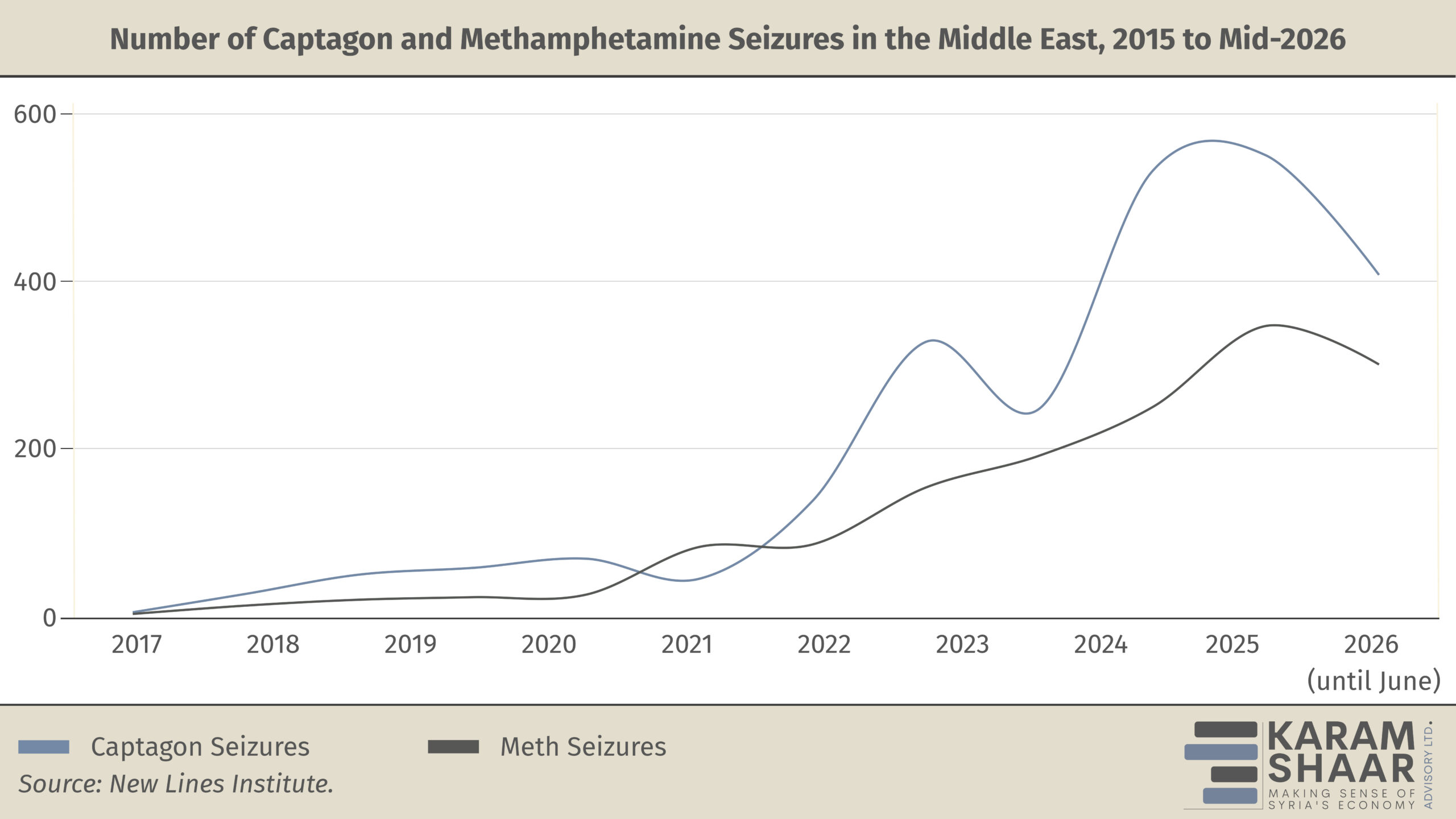
Historically, captagon relied on industrial-scale, centralized production, serving as a financial lifeline for the Assad regime. Its production was largely concentrated along the Syrian-Lebanese border, with smuggling routes running through Lebanon, Jordan, and Iraq. The geopolitical shifts following the fall of the Assad regime significantly undermined its supply lines.
Elsewhere in the region, meth production expanded. It is highly decentralized and linked to a fragmented yet resilient network of “kitchen labs” spanning Türkiye, Kuwait, and Iraq. This decentralized production is harder to suppress because its raw materials are easily accessible. Meth also exploits a wider variety of trafficking routes, moving overland from Iran and by sea from Afghanistan and Pakistan to the Gulf.
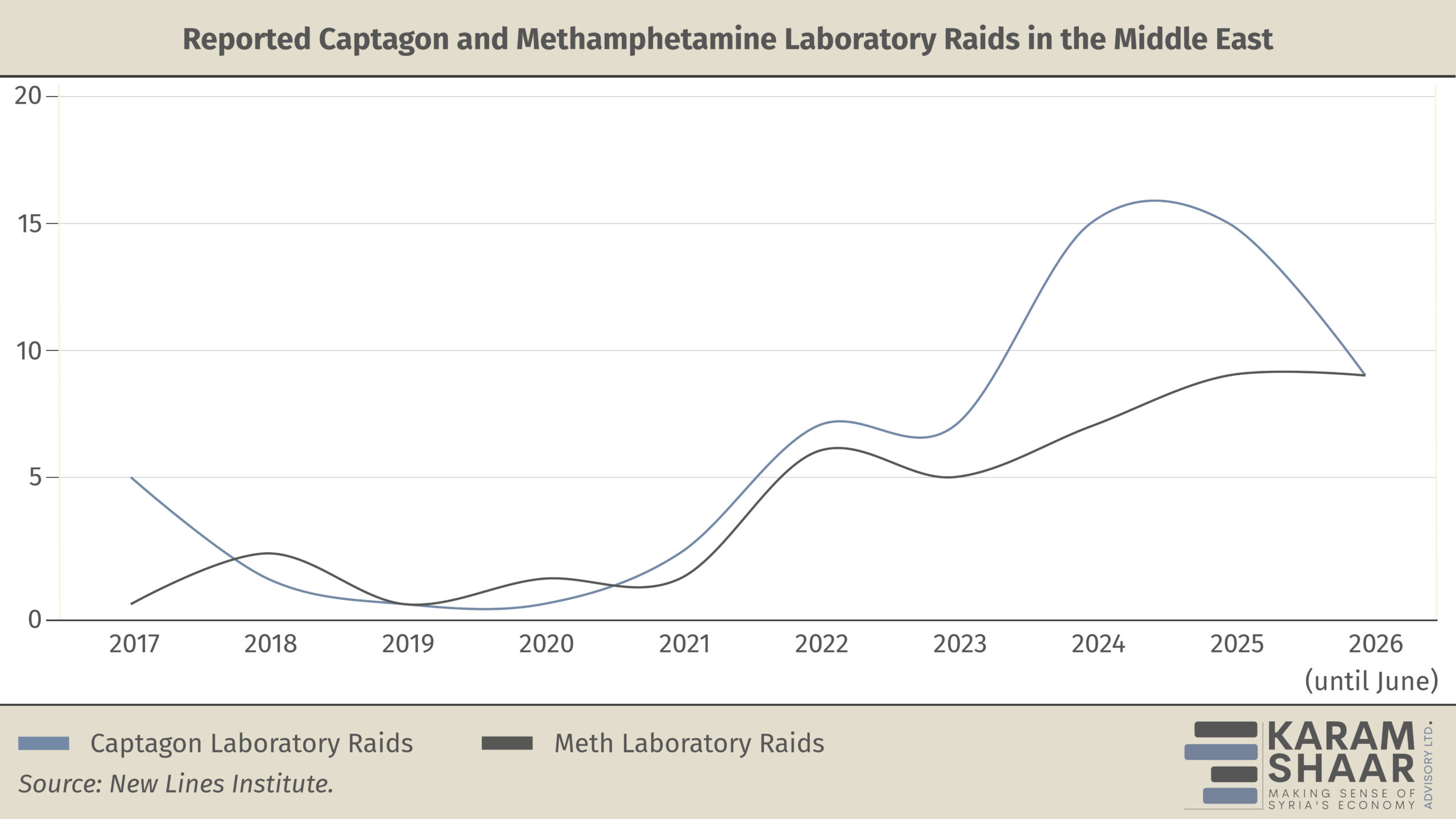
Understanding these differences must inform regional security responses. The data demonstrate that traditional countermeasures, such as targeted border interdictions, may be more effective against a centralized, state-backed captagon trade than against the decentralized, agile meth trade. Countering the meth boom requires targeting precursor substitutes, dismantling kitchen labs, and most importantly, reducing Gulf-wide demand by expanding addiction treatment services. Ultimately, this shift suggests that supply interdiction alone is insufficient without addressing persistent demand, making demand reduction essential to a sustainable response.