By: Hadeel Al-Shaarani
Six months into Syria’s 2026 budget, the figures have moved from projections to a real-world test.
The government projected annual spending of around USD 10.5 billion, nearly three times the USD 3.5 billion spent in 2025. By mid-2026, fiscal performance data showed that higher salaries and wages were among the main drivers of spending growth. The Ministry of Finance expected expenditure to rise further in the second half as pay increases took effect and investment projects advanced.
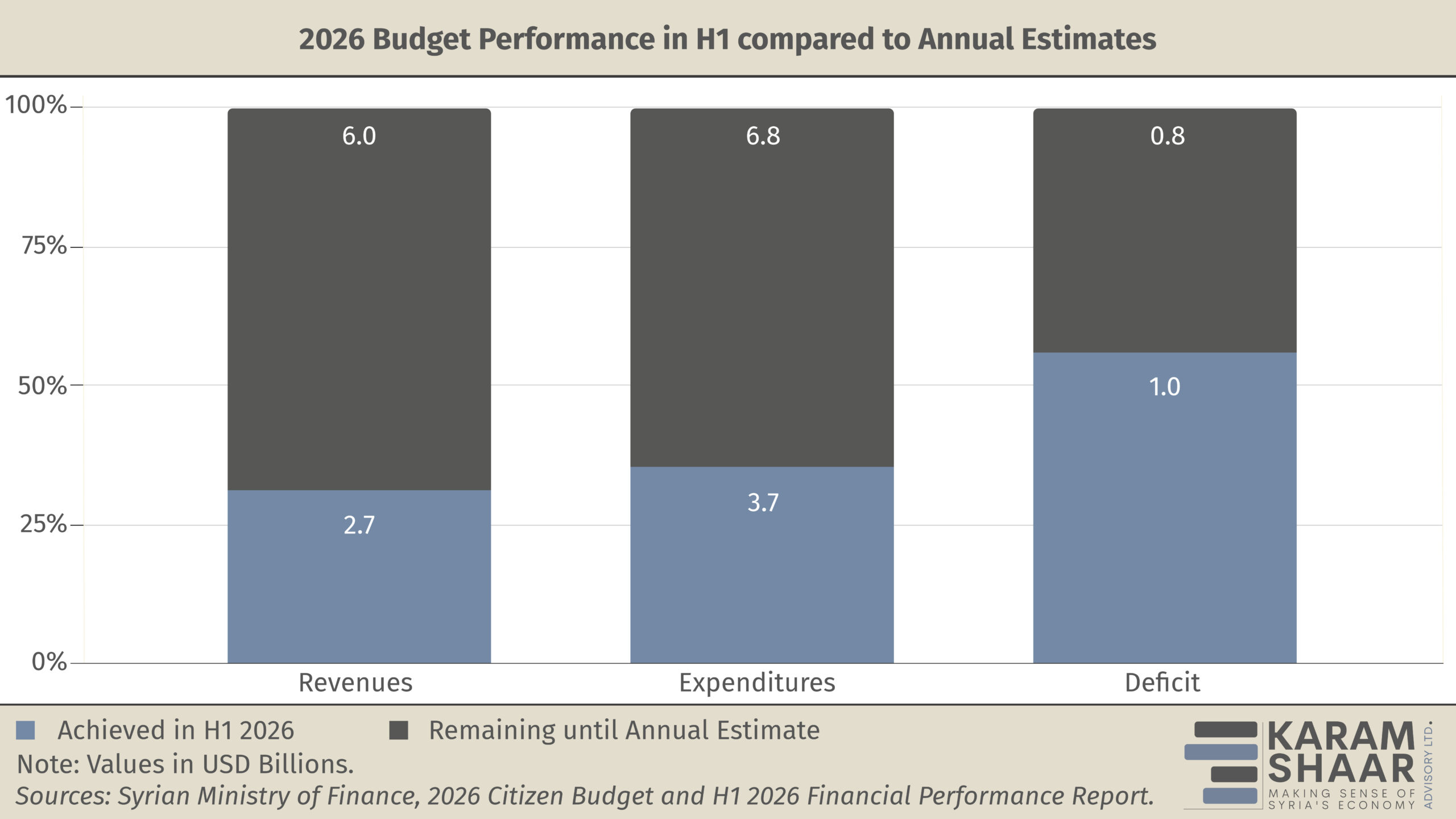
Revenue targets were similarly ambitious. The budget targeted annual revenues of around USD 8.7 billion, up from roughly USD 3.5 billion in 2025. By mid-year, collections had reached about USD 2.7 billion, or 31% of the annual target. The International Monetary Fund described the projections as “ambitious but feasible,” while calling for safeguards if revenues or financing fell short.
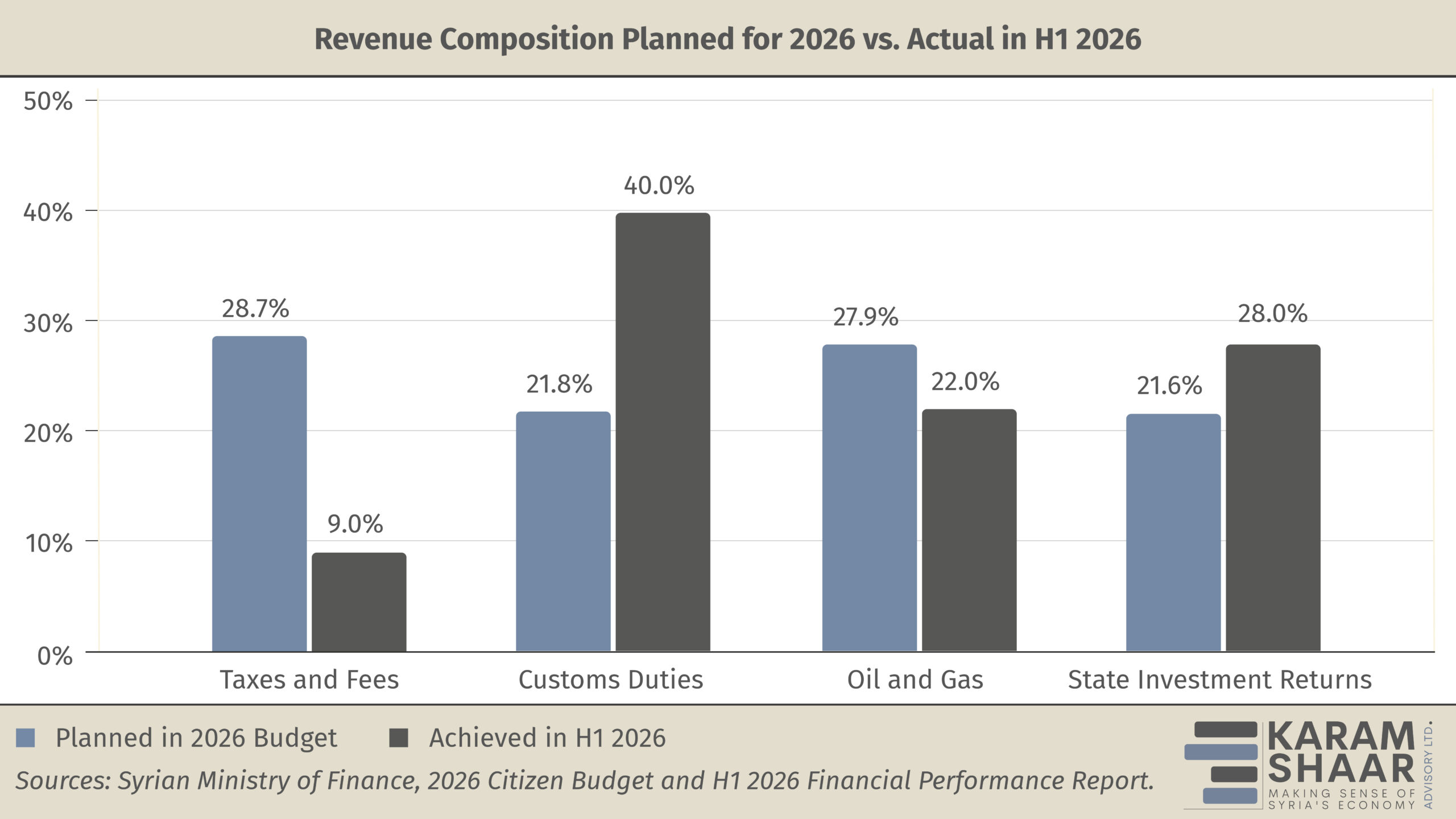
The revenue mix reveals a substantial gap between budget assumptions and actual outcomes. Taxes and fees were expected to account for 28.7% of 2026 revenues, versus 21.8% from customs duties. In the first half of 2026, however, taxes and fees accounted for just 9%, while customs duties accounted for 40%, raising questions about the state’s ability to broaden its tax base in the near term.
The gap between revenues and spending is most clearly reflected in the deficit. In the first half of the year alone, it reached about USD 1 billion, roughly 56% of the projected annual deficit of USD 1.8 billion, even though revenues and spending had reached only about one-third of their projected annual levels.
Mid-year figures alone, however, do not determine the full-year trajectory. The H1 2026 Financial Performance Report notes that revenues—particularly tax revenues—typically rise in the second half of the year and that mid-year collections are consistent with historical patterns. Oil and gas revenues also did not begin flowing to the Ministry of Finance until May. Oil-sector integration in northeast Syria also remained incomplete; a European Parliament report published in July noted that the Syrian Democratic Forces (SDF) were still collecting some oil revenues while negotiations continued on a final oil-production-sharing agreement.
Even so, revenues did not keep pace with spending during the first six months, though this may not reflect the full-year outcome. The expansion in revenue and spending, alongside the publication of detailed implementation data, marks a shift in the management of public finances. A full assessment will have to wait until year-end, but continued disclosure will provide a clearer picture of budget performance.