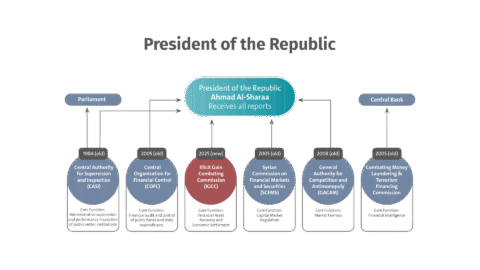
Executive Consolidation and the Limits of Oversight Reform in Post-Assad Syria
Syria’s transitional authorities have intensified anti-corruption enforcement. Does expanded oversight signal genuine accountability or a consolidation of supervisory power within the Presidency?
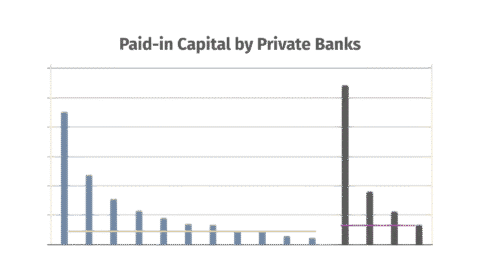
Recapitalizing Private Banks: Urgency and Policy Options
With private banks holding less than 800 million USD in total equity, recapitalization is urgent. This article reviews banks’ balance sheets, examines the drivers of capital erosion, and proposes solutions.
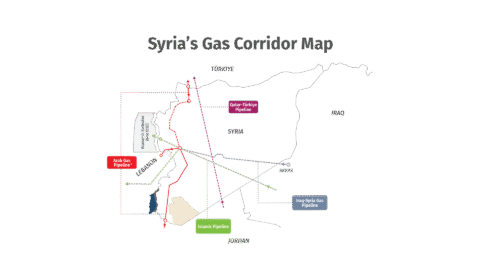
Rethinking Syria’s Place in the Regional Gas Map
In the third article of this series, we examine Syria’s place in emerging regional gas corridors. Can it become a genuine energy hub, or will it remain a transit state shaped by external actors?
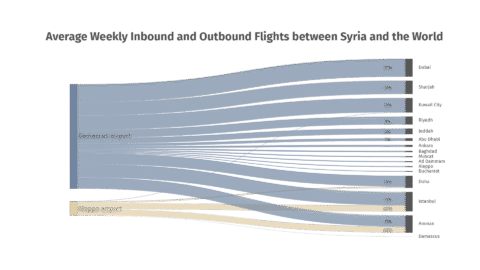
Syria’s Aviation in 2025: An Inhibited Recovery
Syria’s aviation sector rebounded sharply in 2025 following the easing of most US sanctions. Could this extend beyond a narrow regional network? What constraints still limit international reintegration?

External Contribution – Controlled Pluralism: How Syria’s New Leadership Manages Sunni Islam
Syria’s new leadership has unveiled a Charter for the Unity of Islamic Discourse to promote pluralism within Sunni Islam. It will also consolidate state control over the country’s religious sphere.
Interview: Omar Barahmji – Chairman of the Board of Directors, Damascus Securities Exchange
Omar Barahmji discusses legislative reform, market recovery, governance, technological modernization, and plans to deepen and integrate the Damascus Securities Exchange within regional financial systems.
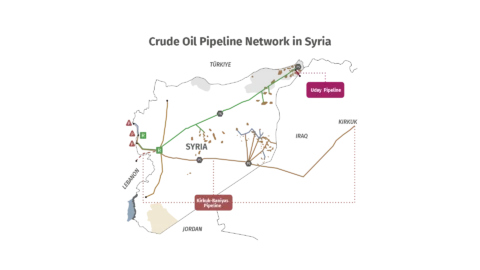
The Revival of Syria’s Oil Pipeline Network
With new momentum between Damascus and Baghdad, we examine the feasibility, costs, and implications of reviving the Kirkuk-Baniyas pipeline.
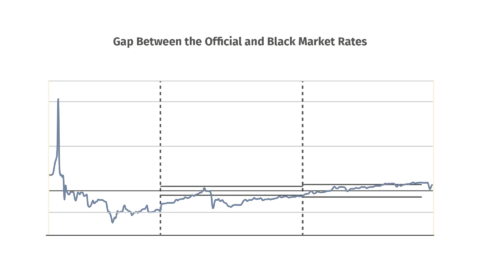
The Syrian Pound: Policy Limits and Market Pressures
In 2025, the Central Bank announced the unification of official exchange rates and imposed a fixed trading margin between the official and black market rates. How did it track along in reality?
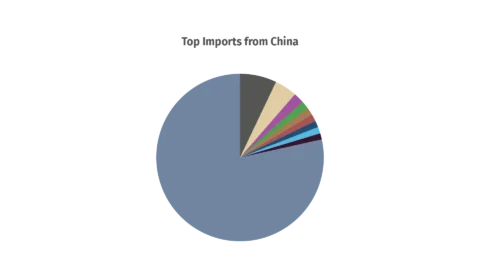
China’s Asset-Light Approach in Syria’s Transition
China’s mood toward Damascus is improving. Private trade and investment are recovering, but Beijing’s security and economic calculus continue to cap cooperation.
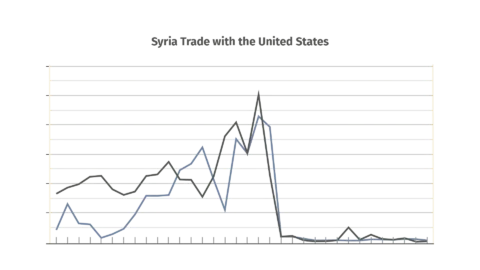
US-Syria Trade Between Sanctions, Overcompliance, and Tariffs
The suspension of many U.S. sanctions removed a layer of complex regulatory restrictions. However, remaining tariff and non-tariff barriers continue to keep Syrian exports commercially unviable.

External Contribution: Alameen Najjar, Syrian geospatial data scientist and founder of Syria From Above
Mapping nighttime light provides a rare insight into Syria’s recovery. Analysis shows that government-controlled cities are experiencing a surge, whereas As-Suwayda stands as a glaring outlier.
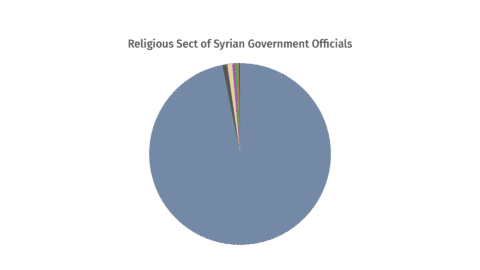
Syria’s Economy a Year into Assad’s Downfall: The Good, the Bad, and Ugly
Karam Shaar— A year on, Syria has almost certainly recovered faster than forecast. However, the overall economic direction is increasingly unclear with multiple worrying signs.