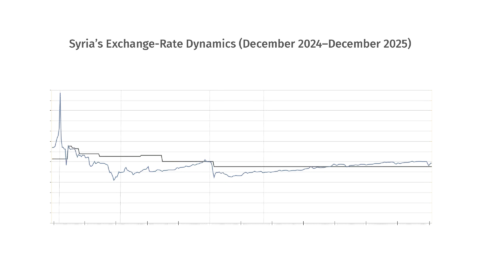
The Syrian Pound: A Year of Signals and Volatility
In 2025, the Syrian pound moved less on economic fundamentals than on headlines. This article examines how announcements, liquidity controls, and market sentiment shaped the currency over the year.
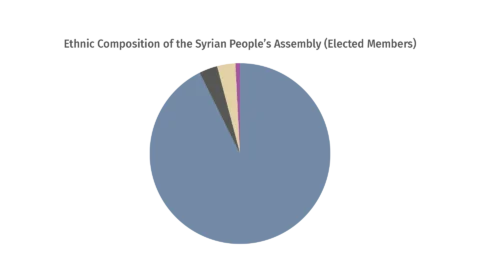
The Syrian People’s Assembly 2025: Electoral Results and Representation Gaps
The first post-Assad parliament was meant to signal inclusion. Our mapping of the 119 elected MPs tells a different story, clearly showing who made it in and who is absent.
Beyond Iran: Where Is Syria Importing Oil From?
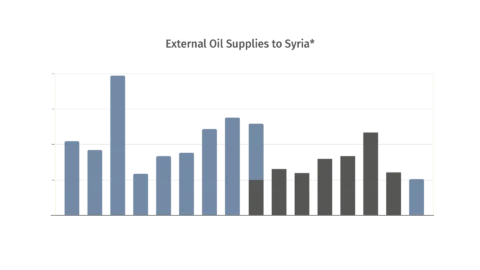
Syria is simultaneously importing and exporting crude. We investigate this paradox, including how a little‑known buyer may mask a larger company and what the supplier map means for Syria’s energy security.
Israel’s Expanding Military Footprint in Syria: One Year On
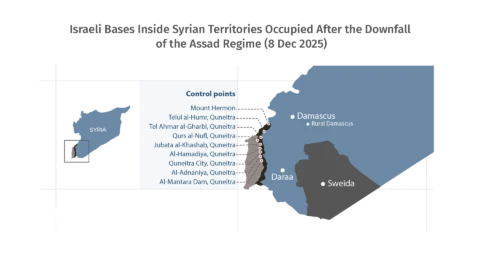
What began as a “buffer zone” is turning into a permanent presence. One year on, we look at how Israel’s incursions are reshaping daily life in Syria—and raising the risk of escalation.

The Revival of Syria’s Gas Pipeline Network
After a decade of war and sabotage, gas is again flowing in through neighbouring countries, with Qatar footing the bill. Syria’s new energy map is taking shape, revealing who is powering the recovery—and gaining influence.

From Deflation to Uncertainty
Syria’s deflation is already slipping, just as the Central Bank stops publishing inflation data. Fresh WFP figures show living costs quietly rebounding, exposing how fragile the recent “stability” really was.

Managing Syria’s Forests Amid Environmental and Social Challenges
With nearly a third of Syria’s tree cover gone, forests have become fire-prone front lines where poverty, conflict pressures, and climate extremes meet. Environmental loss is quickly becoming a political fault line.

Mapping MoUs in Syria: Shifting Investment Agendas
New Gulf and Turkish MoUs are reshaping Syria’s investment agenda, signaling a shift away from the conflict-era landscape dominated by coercive Russian and Iranian deals.

External Contribution: Julien Barnes-Dacey, Director of the Middle East & North Africa programme at the European Council on Foreign Relations
Europe and Syria’s Fragile Transition
Europe has backed Syria’s transition with significant support, yet Damascus increasingly treats Europeans as an afterthought. This widening strategic gap threatens a relationship central to Syria’s stability and to Europe’s core interests.

Interview: Mazen Darwish, President of the Syrian Center for Media and Freedom of Expression
In an exclusive, Mazen Darwish reveals that France will transfer €32 million from Rifaat al-Assad’s seized assets to the Syrian government and reflects on the deeper structural flaws in Syria’s justice system.

Syria’s Post-War Economic Architecture: Centralization, Funds, and Reform
A new council, two funds, and a rewired investment law—Syria’s economic infrastructure is being rebuilt at speed. But does centralization unlock delivery or hard-code cronyism into the recovery?

Mapping MoUs in Syria: Risk and Credibility Assessment
Billions worth of MoUs, but who’s actually behind the signatures? Our analysis maps the 40 MoU signatories and spotlights the red flags that could sink flagship projects.