

Publications
Here we share all our published work, including peer-reviewed academic papers, policy papers, and op-eds.
Research Area
Publisher
Publication Type
Date Range
Applied Economics Letters (Peer-reviewed academic paper), Karam Shaar and Mohammed Khaled (Dec 20, 2017)
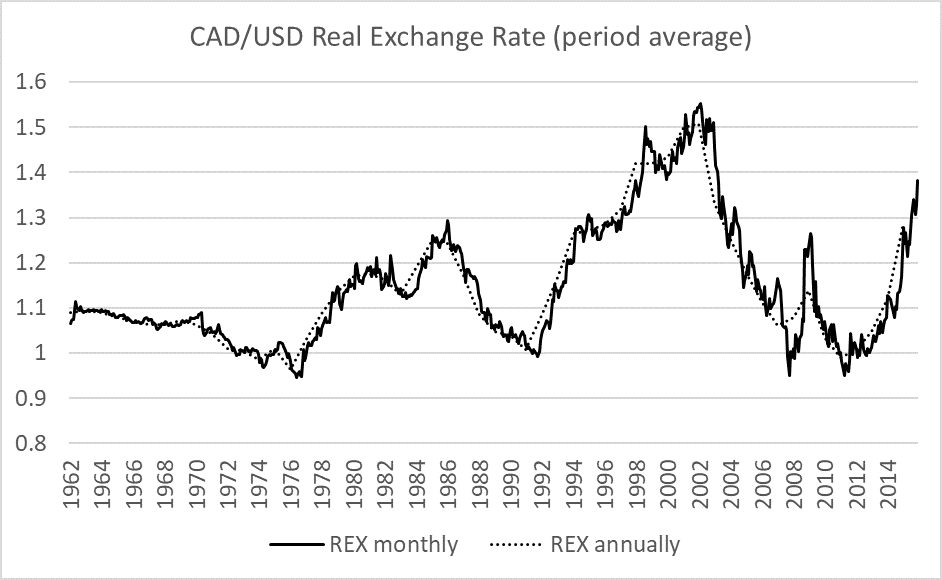
This study suggests that testing the impact of exchange rate on trade should be done using high-frequency data. Using different data frequencies for identical periods and specifications between the US and Canada, the authors show that low-frequency data might suppress and distort the evidence of the impact of exchange rate on trade in the short run and the long run.
Aleppo Project, School of Public Policy, Central European University (Policy Paper) (Jun 23, 2016)
Understanding changes in the composition of the job market will greatly enhance reconstruction efforts in post-war Aleppo as it allows a better understanding of the availability and quality of the labour force.
In late 2014 and early 2015, The Aleppo Project surveyed 1001 Aleppians about many issues.
This paper focuses on the two questionnaire items related to current professions of the respondents and their previous professions. Dr Karam Shaar shows that the composition of the job market has pointedly changed due to the conflict and that the differences in the rate of unemployment among Aleppians are largely explained by gender, age, education, and the neighbourhood from which the respondents come. The study provides policy recommendations.

Journal of International Trade & Economic Development (Peer-reviewed academic paper), Karam Shaar and Mohamed Ariff (Jan 29, 2016)
Findings reported in this paper provide an improved explanation as to what factors are correlated with price levels across a large sample of 152 countries. The results are obtained from using a new set of variables called economic freedom indices, covering 19 years. Prior studies used income, trade openness, and productivity, which led to results with much less explanatory power compared to findings reported in this paper. The authors apply advanced panel data econometrics to obtain robust estimates of parameters, which, in their view, led to results with a substantially high coefficient of variations close to 90%. The findings show that all the nine dimensions of economic freedom used in this study significantly account for the variations in national price levels.
