Publications
Here we share all our published work, including peer-reviewed academic papers, policy papers, and op-eds.
Research Area
Publisher
Publication Type
Date Range
Observatory of Political and Economic Networks, Vittorio Maresca di Serracapriola and Karam Shaar (May 20, 2025)
Targeted sanctions are often viewed as the precision-guided munitions of economic statecraft. Yet in Syria, where sanctioned actors control core economic sectors, these measures can trigger unintended systemic effects. While the EU has lifted sectoral sanctions to enable reconstruction, its targeted sanctions continue to obstruct the very actors and transactions needed to achieve it. This report proposes a methodology to determine whether such listings should be lifted or maintained, based on their real-world impact on economic recovery.
Middle East Institute, Karam Shaar (May 6, 2025)
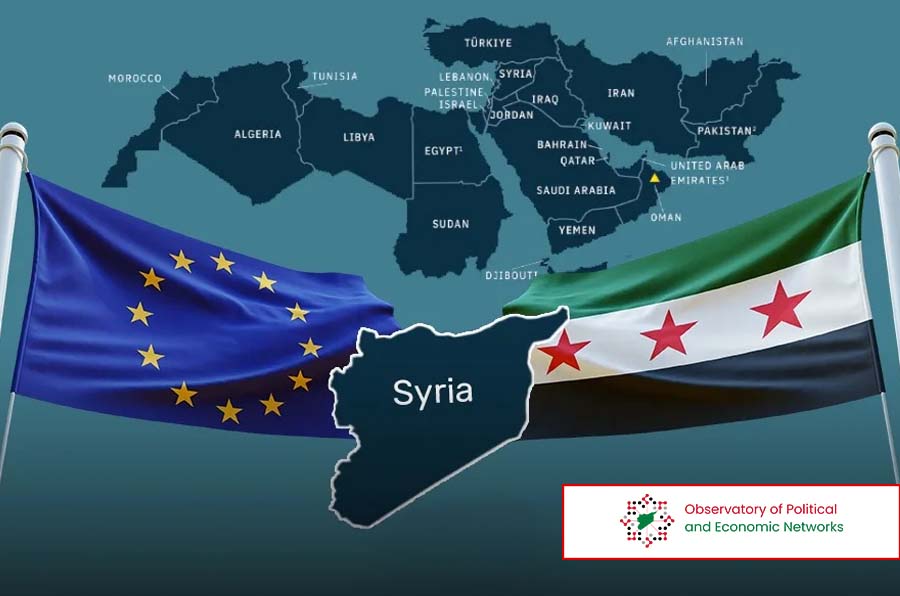
As the EU prepares to renew its sanctions on Syria, this article argues for their immediate and unconditional repeal. While initially grounded in legal and moral opposition to Assad’s repression, the sanctions are now misaligned with Syria’s political reality, ineffective in promoting recovery, and counterproductive to EU interests. The report urges the EU to abandon all sectoral sanctions and maintain relevant targeted sanctions by transferring names from the Syria program to the EU Global Human Rights Sanctions Regime. Letting the Assad-era sanctions expire, Dr. Shaar contends, is not a concession to impunity but a necessary step toward restoring principled and effective EU policy.
Observatory of Political and Economic Networks, Mohammad Orwani, and Daniel Wilkofsky (April 26, 2025)
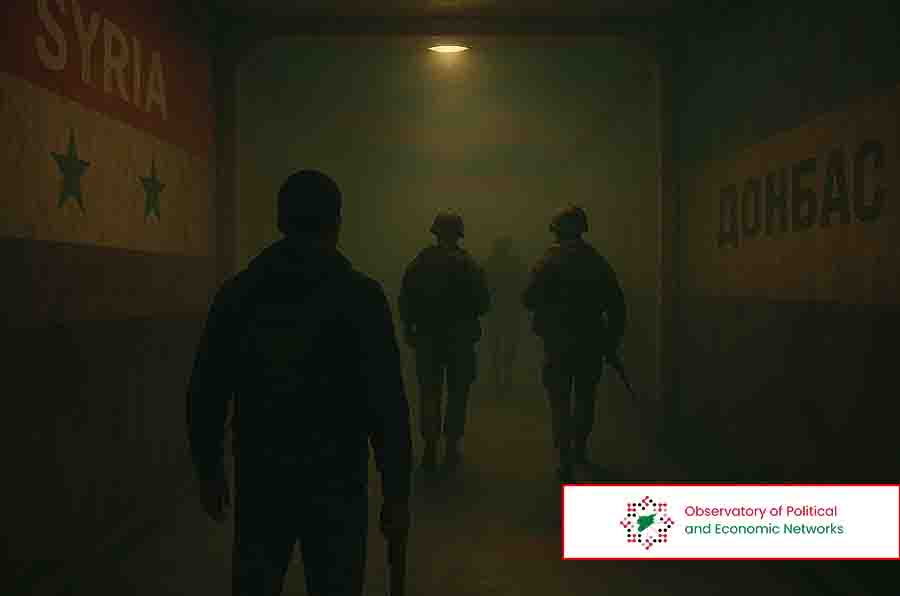
As Russia’s war in Ukraine drags on, new patterns of foreign recruitment have emerged from Syria. This report profiles three key intermediaries involved in recruiting Syrian men—often civilians and unfit for combat—for deployment to Ukraine. Based on interviews with recruits, open-source research, and field investigation, it documents recruitment methods, financial exploitation, and the broader role of intermediaries in Russia’s global efforts to source fighters. It also assesses the future of Syrian recruitment following the fall of the Assad regime.
Observatory of Political and Economic Networks, Karam Shaar, Mohammad Orwani, and Traci Lawrence (April 22, 2025)
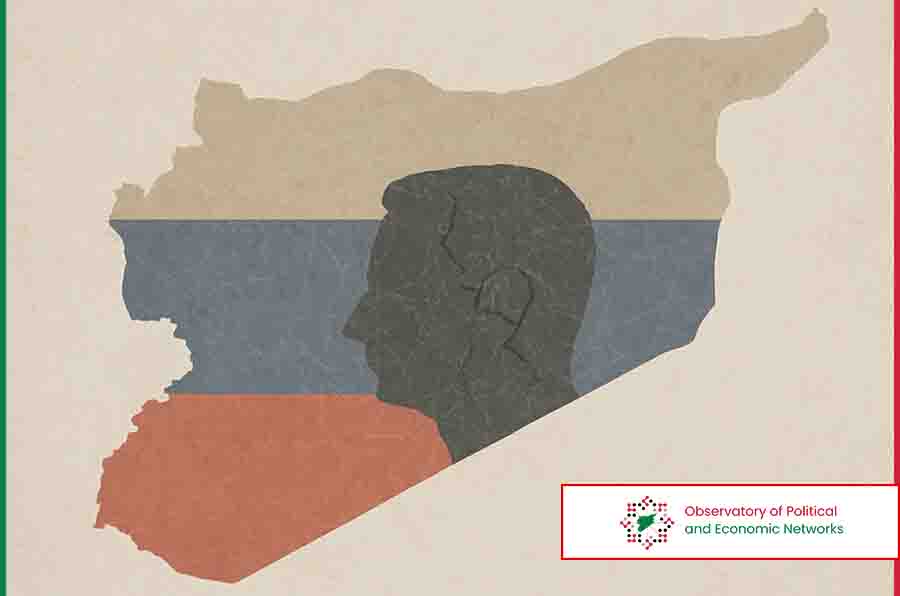
In the decade preceding the downfall of the Assad regime, Russia’s economic influence in Syria increased significantly. By providing political and—from September 2015—military support, Russia secured leverage over Damascus and established a foothold in the energy, extractive, and security sectors. This study bridges knowledge gaps by mapping Russian economic interests, identifying key players and ultimate beneficiaries using front partners to evade scrutiny and sanctions. Using OPEN’s database, official and unofficial sources, and OSINT, the authors identify ties between 35 Russian firms and a network of 330 individuals and entities. Finally, the report summarizes the fate of these investments following the downfall of the regime.
Observatory of Political and Economic Networks, Karam Shaar, Dima Muhammad, and Dan Wilkofsky (April 12, 2025)
In the wake of the Assad regime’s collapse, the Iranian government has faced domestic criticism over its massive expenditures to prop up the Syrian dictator, even as Iranians suffered economic hardship at home. Much remains unknown to the Iranian and Syrian public and the wider world about the extent of these expenditures and what Iran received economically in return. Did Iranian state actors, or the private sector, secure lucrative investments in exchange for the Syria intervention? How much money did Iran actually spend in Syria? What will happen to the Syrian debt file and Iran’s investments now that Assad has been deposed? This report sheds light on the above questions, and others, by systematically mapping Iran’s economic activities in wartime Syria from 2011 to 2024.