Publications
Here we share all our published work, including peer-reviewed academic papers, policy papers, and op-eds.
Research Area
Publisher
Publication Type
Date Range
Foreign Affairs, Karam Shaar and Benjamin Fève (Dec 20, 2024)
Karam Shaar and Benjamin Fève explore the profound economic collapse confronting Syria’s new leadership in the wake of the regime’s abrupt fall on 8 December. With Hay’at Tahrir al-Sham overseeing the transitional period, the authors contend that avoiding further instability will require a combination of comprehensive reforms and carefully sequenced international support. They detail the widespread devastation of Syria’s economy and infrastructure, the fragmentation of its governance and currencies, and the displacement crisis within and outside the country. They advocate for the immediate easing of sanctions on critical sectors such as energy and banking, while maintaining that broader relief relating to terrorism should be contingent upon meaningful political reform. The authors emphasize the urgent need to unify Syria’s fractured economic systems, revive private-sector activity, and reintegrate the country into the global economy—warning that inaction could entrench the humanitarian crisis and fuel ongoing regional instability.
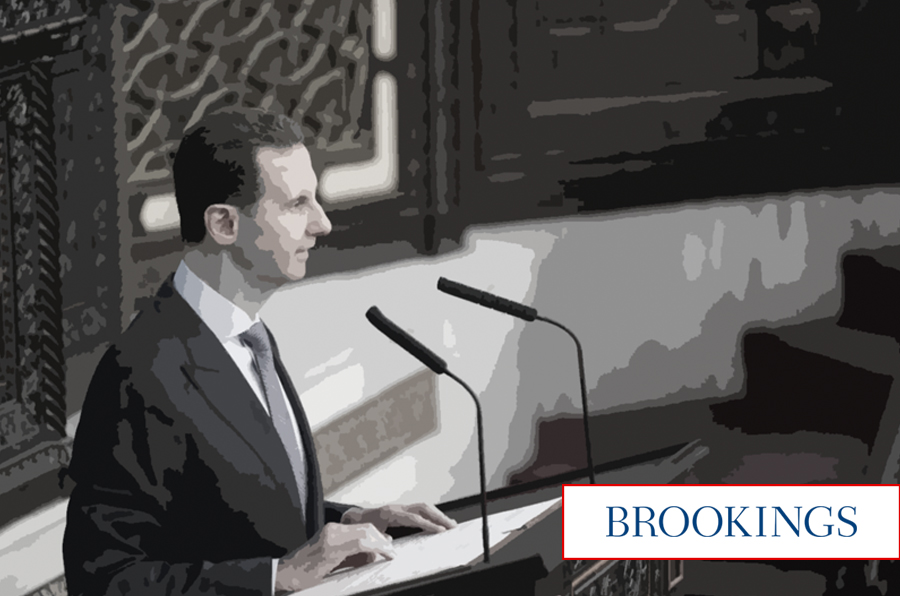
Brookings Institution (Policy Brief), Karam Shaar and Steven Heydemann (Aug 26, 2024)
This policy brief explores how President Bashar al-Assad is restructuring Syria’s economic networks to ensure his access to resources despite the economic collapse faced by the rest of the country. By centralizing control over critical sectors through new economic fronts, Assad is positioning himself as a major economic actor, further entrenching his power while the humanitarian crisis faced by ordinary Syrians worsens. Our analysis sheds light on the inner workings of these networks, offering insights for policymakers aiming to forge a political settlement to the ongoing conflict. Understanding these networks is essential for devising effective strategies to counter the regime’s resilience in the face of international pressure.
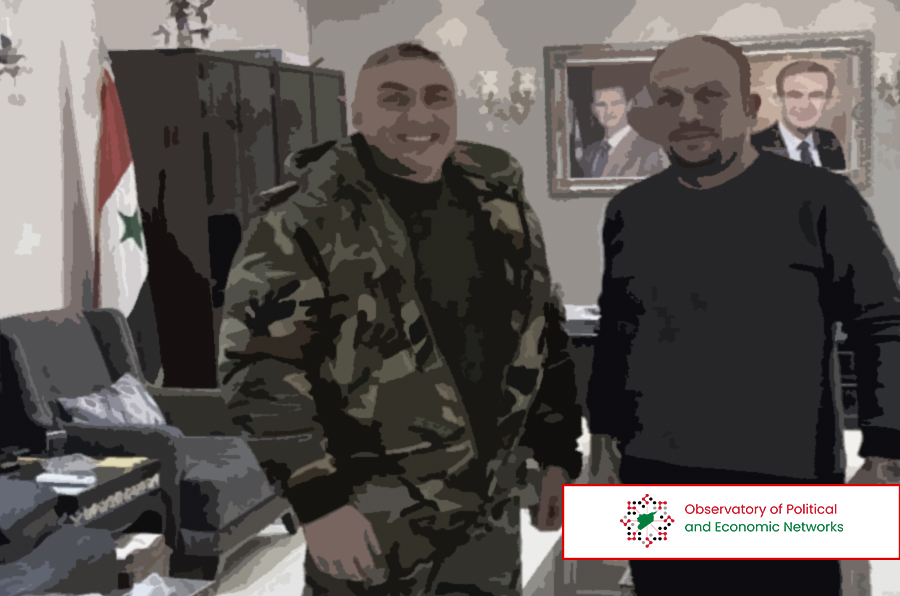
Observatory of Political and Economic Networks, Karam Shaar (July 5, 2024)
In 2020, the EU sanctioned Maher al-Imam for his financial support to the Syrian regime, but his appeal was dismissed by the Court of Justice of the European Union in 2021. Despite his reduced public support and withdrawal from formal business dealings, Maher maintains control over key companies linked to the regime through his associate Muhammad Ammar Dalloul. Although, Maher transferred his shares in “Waves” to Dalloul in 2022, he yet still appears to be in control of the company. Last month, the EU delisted Maher without public justification, despite evidence suggesting that both Maher and Dalloul should be sanctioned for their ties to the Assad regime. This delisting exemplifies the failure of Western governments to understand the complex business-regime networks in Syria, highlighting the need for the EU and Western governments to revise their sanctioning processes to enhance their effectiveness while mitigating unintended consequences for innocent civilians.
For further details, you can read the full report here.
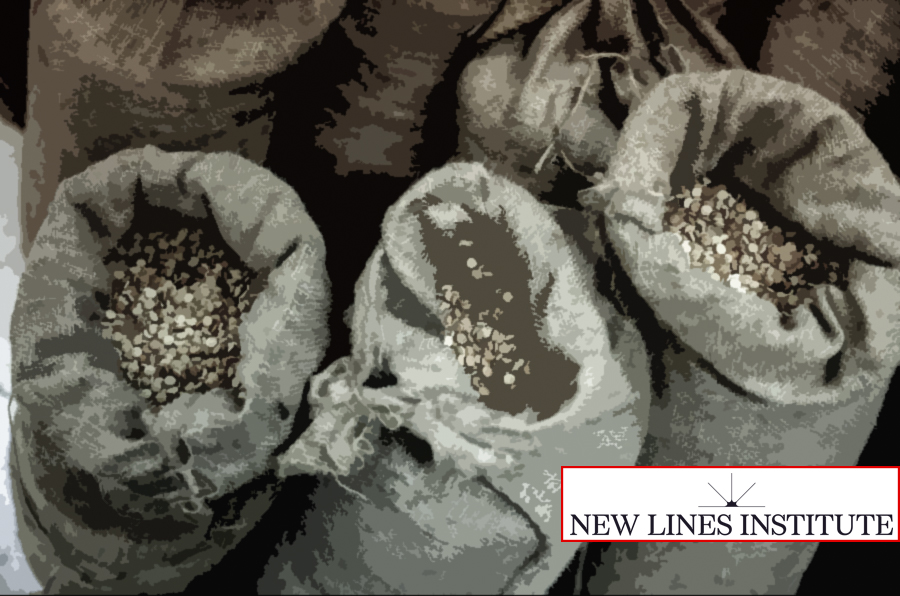
Newlines Institute, Karam Shaar and Caroline Rose (May 30, 2024)
In this report from the New Lines Institute, Caroline Rose and Dr Karam Shaar delve into the evolution of the Captagon drug trade from 2015 to 2023. They underscore the notable surge in seizures between 2018 and 2021 and how it has since stabilized. The report details the enhanced sophistication of trafficking methods and the militarization of smuggling operations. The key findings reveal the pivotal role of the Syrian state, the involvement of Syrian nationals across various countries within the supply chain, and the strategic geopolitical ramifications of the trade. Policy recommendations emphasize the necessity of coordinated regional efforts and assertive U.S. leadership to effectively address the Captagon crisis. For further details, you can read the full report here.
The World Bank, Karam Shaar (27 May 2024)
Dr Karam Shaar contributed as a senior consultant to this World Bank report alongside a stellar group of economists. The report provides an update on Syria’s economy and thoroughly examines specific topics. While he peer-reviewed the report, his focus was primarily on the elements relating to the economics of captagon.