Publications
Here we share all our published work, including peer-reviewed academic papers, policy papers, and op-eds.
Research Area
Publisher
Publication Type
Date Range
Observatory of Political and Economic Networks, Vittorio Maresca di Serracapriola and Karam Shaar (Mar 28, 2025)
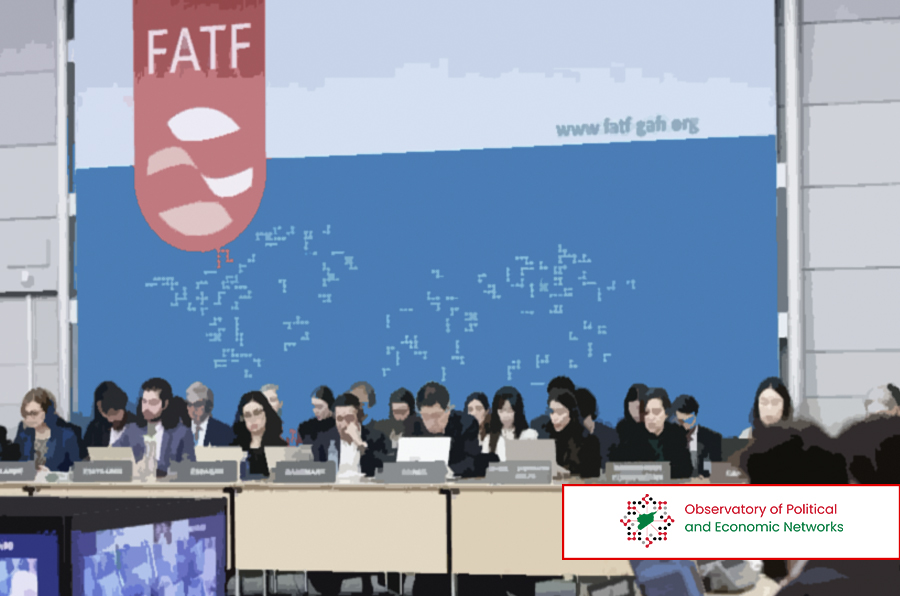
Karam Shaar and Vittorio Maresca di Serracapriola examine Syria’s continued gray-listing by the Financial Action Task Force (FATF) since 2010 due to strategic deficiencies in the country’s anti-money laundering and counter-terrorism financing frameworks. Although Syria completed its FATF action plan by 2014, the absence of an on-site evaluation due to citing security concerns has kept it on the gray list. This status exacerbates Syria’s financial isolation, even amid partial sanctions relief, by raising compliance costs and deterring foreign investment. The report highlights the exact areas of deficiency according to FATF’s recommendations and argues that lifting sanctions alone is insufficient to restore banking ties; instead, the Syrian Interim Government must actively engage with FATF, strengthen its AML/CFT measures, and facilitate the long-overdue on-site visit to pave the way toward financial reintegration.
Benjamin Fève, Vittorio Maresca di Serracapriola, and Karam Shaar (March 17, 2025)
On 24 February 2025, the EU enacted its most significant changes to Syria sanctions since 2011, introducing permanent exemptions and suspensions to support Syria’s transition and economic recovery after the fall of the Assad regime in December 2024. The revisions removed four public banks from the sanctions list, allowed limited transactions with the Central Bank of Syria, eased EU-Syria banking restrictions, and lifted bans on importing Syrian oil, exporting energy equipment, and investing in the power sector. Temporary humanitarian aid exemptions were made permanent, and travelers can now bring personal luxury items into Syria, though commercial sales remain prohibited. Reinstating sanctions would require unanimous EU approval, with no automatic snapbacks. However, U.S. secondary sanctions, compliance risks, Syria’s FATF gray-listing, and global “de-risking” continue to deter engagement, limiting the economic impact without broader reforms and regulatory assurances.
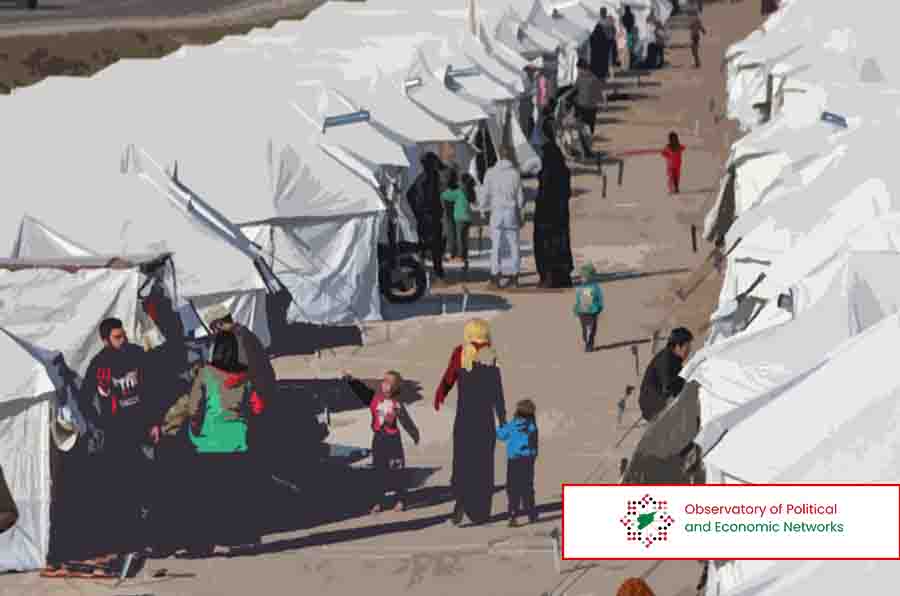
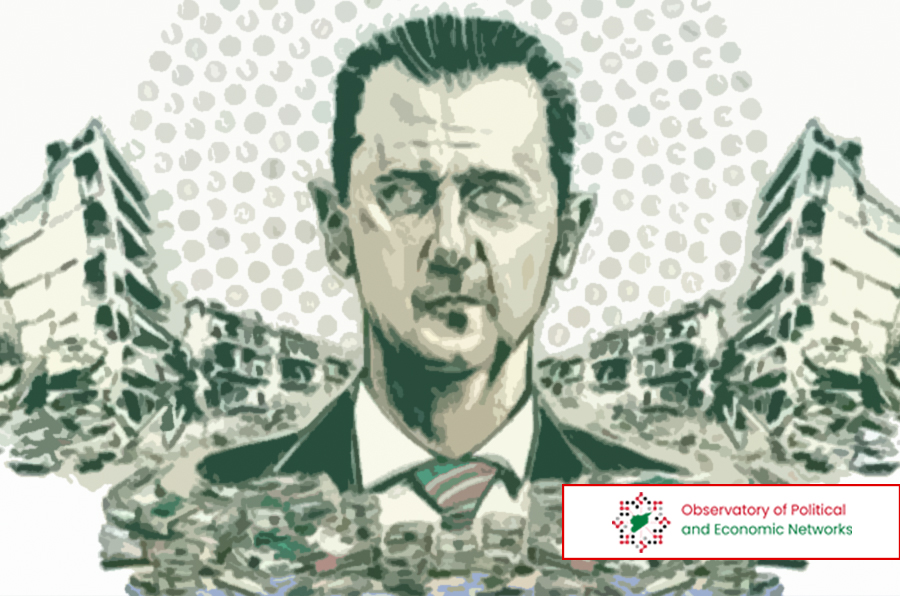
The report examines how Assad’s regime weaponized captagon in 2024 to seek regional normalization, reducing supply while preserving industrial-scale production. Despite record seizures, pill volumes declined, suggesting strategic throttling. The regime avoided major lab busts, distanced itself from key traffickers, and halted large maritime smuggling. After Assad’s ouster, Syria’s caretaker government exposed regime-linked facilities and renounced the trade. The report warns of regional spillover, including rising methamphetamine production in Iraq, Kuwait, and Türkiye. It calls for US-led multilateral coordination, Mediterranean-Gulf intelligence sharing, and technical support for Syria’s new authorities in chemical profiling and harm reduction.

Observatory of Political and Economic Networks, Karam Shaar and Vittorio Maresca di Serracapriola (Feb 21, 2025)
Karam Shaar and Vittorio Maresca di Serracapriola analyze how the US terrorist designations and delisting mechanisms interact with UN sanctions. The US has sanctioned Ahmad al-Sharaa, Syria’s Interim President and de facto leader, solely under the Specially Designated Global Terrorist (SDGT) designation. Meanwhile, his group Hay’at Tahrir al-Sham (HTS) holds both an SDGT designation and a Foreign Terrorist Organization (FTO) label. The report examines the comparative stringency of these designations, showing how each imposes severe legal and financial restrictions. It also highlights the interaction between UN and US delistings, noting that unlike listings—mandated by the UN Security Council through Chapter VII resolutions—delistings do not carry the same binding requirement.
Observatory of Political and Economic Networks, Karam Shaar and Benjamin Feve (Jan 10, 2025)
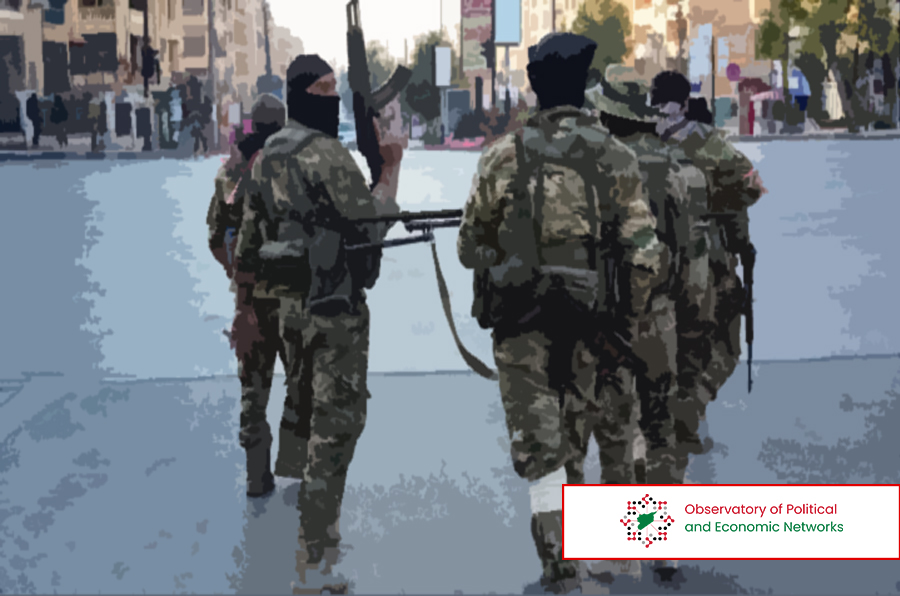
Karam Shaar and Benjamin Feve analyze General License 24 (GL24), issued on 6 January 2025, as a U.S. Treasury measure to address Syria’s post-Assad needs. GL24 facilitates targeted transactions for energy provision, personal remittances, and governance, aiming to alleviate humanitarian crises and stabilize essential services. The report highlights successes such as doubling Syria’s electricity capacity and enabling a significant salary increase for public employees. However, it notes key limitations, including the absence of provisions for reconstruction, compliance challenges, and the short six-month duration, which discourages long-term initiatives. The authors emphasize the need for recalibrated sanctions to balance urgent humanitarian needs with sustainable recovery efforts.