Publications
Here we share all our published work, including peer-reviewed academic papers, policy papers, and op-eds.
Research Area
Publisher
Publication Type
Date Range
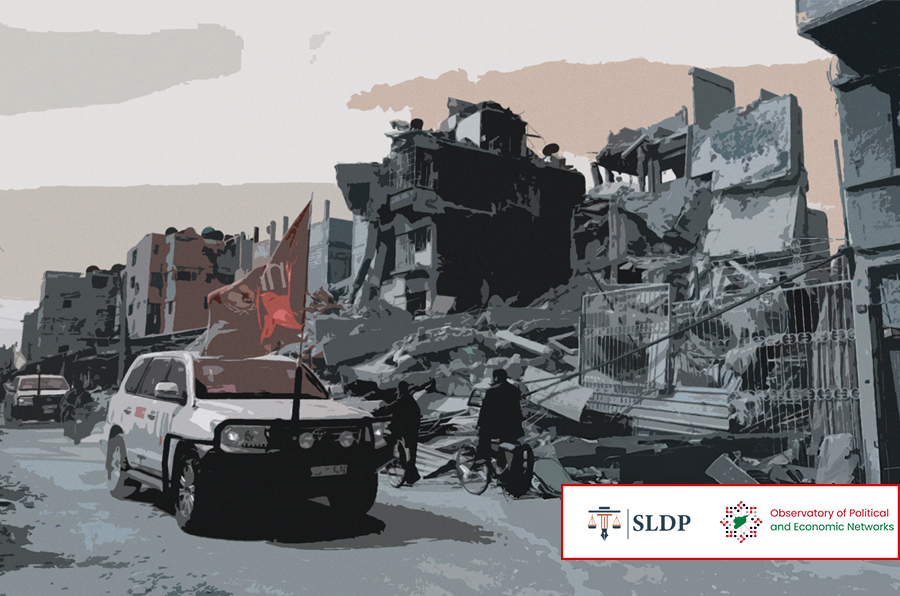
Syrian Legal Development Program and Observatory of Political and Economic Networks, Karam Shaar (Investigation Report) (Oct 25, 2022)
The catastrophic situation in Syria since the 2011 uprising has made the country one of the largest recipients of humanitarian aid in the world. The bulk of spending of this multi-billion aid is facilitated by the United Nations (UN), which continues to operate in a highly restrictive environment. This report examines how private companies involved in human rights abuses benefit from the UN’s procurements from the country and the share of funding going to them. Numerous articles have exposed some problematic suppliers to the UN, such as the Four Seasons Hotel in Damascus. However, this report is the first systematic and quantitative effort to examine the dynamics of such suppliers. Using the official Syrian gazette and open-source intelligence, it does so by investigating the backgrounds of the top 100 private and public-private suppliers in 2019 and 2020. These suppliers constitute 94% of total procurement spending, enabling the report to make conclusions about the procurement process in general. To have a more holistic and nuanced understanding of the issue, the investigations are supplemented by interviews with UN staff, businesspeople, and experts on UN operations in Syria from diplomatic and civil society backgrounds.
To view the interactive tool, click here.
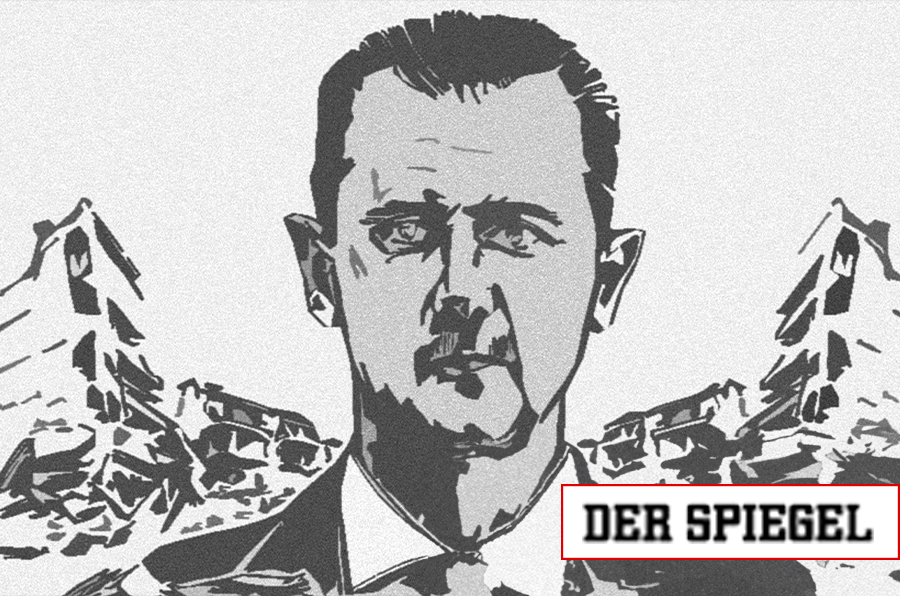
Spiegel International (Investigation), Karam Shaar, Jörg Diehl, Mohannad al-Najjar and Christoph Reuter (Jun 21, 2022)
By tracing a Captagon shipment that left the Port of Latakia and arrived in Romania on its way to Germany, and through a multi-year-effort of German investigators, prosecutors will for the first time show evidence of the central role of the Assad regime and his clan in the dirty trade.
The Guardian (Investigation), Karam Shaar and Tessa Fox (Mar 22, 2022)
The Syrian regime is actively setting up shell companies within Syria, according to official documents I provided to The Guardian. The documents show that three nearly identical companies were recently established on the same day, with the explicit purpose of buying shares and managing other companies. In this article, Tessa Fox and I present the links between the owners of the new shells and influential members in the Syrian regime, such as Yasar Ibrahim and Khodr Ali Taher. Since the finalization of the article, a few more shell companies have been set up, highlighting a systemic attempt at circumventing sanctions and avoiding accountability. Last October, Syria’s economy minister, Muhammad Samer al-Khalil, said that “evading sanctions has become a Syrian craft,” and called on foreign investors reluctant to join the market because of sanctions “not to appear under their true names in the local market.” We also discuss the implications for Western sanctions on Syria, with comments from experts and officials.

Aljumhuriya, Karam Shaar (Op-ed) (Feb 24, 2022)
The plight of Syrians is becoming increasingly irrelevant to Western politicians as reflected in their demonstrable lack of interest in pushing for a political settlement to the conflict. Dr Karam Shaar also shows using data from Google Trends that the level of public interest in Western countries in Syria has never been lower throughout the conflict. In fact, it’s currently, lower than prior to the conflict in 2011. How did Syria fall into irrelevance?
Operations and Policy Center (OPC) and Middle East Institute (Policy Brief), Karam Shaar, Ashley Jordan and Samy Akil (Feb 22, 2022)
Despite the slowdown in military operations in Syria, other acts of violence and human rights violations remain the norm, making the whole-of-Syria unsafe for return. Published in collaboration with the Middle East Institute, this summary recaps on a recently published research project aimed at understanding the scale and types of violations experienced by Syrian returnees.
